+86-13777321650


 русский
  Español

How Do You Style a Chenille Duvet Cover in a Modern Bedroom?
Content
- 1 What Makes Tufted Chenille Embroidery Duvet Covers Stand Out
- 2 The Rise of Textured Bedding: Market Trends in Visual Context
- 3 Color Pairing Guide for a Chenille Duvet in a Modern Bedroom
- 4 How to Layer a Tufted Duvet Cover for a Designer Bed Look
- 5 Performance Attributes: Softness, Breathability, and Durability Compared
- 6 Sizing Guide for Full, Queen, and King Beds
- 7 Care and Maintenance: Preserving the Chenille Embroidery Over Time
- 8 Bedroom Styling Tips: Accessories That Complement Leaf Embroidery Bedding
- 9 Sustainability and Certification: Why OEKO-TEX Matters
- 10 About Hangzhou Directions Import & Export Co., Ltd.
- 11 Frequently Asked Questions
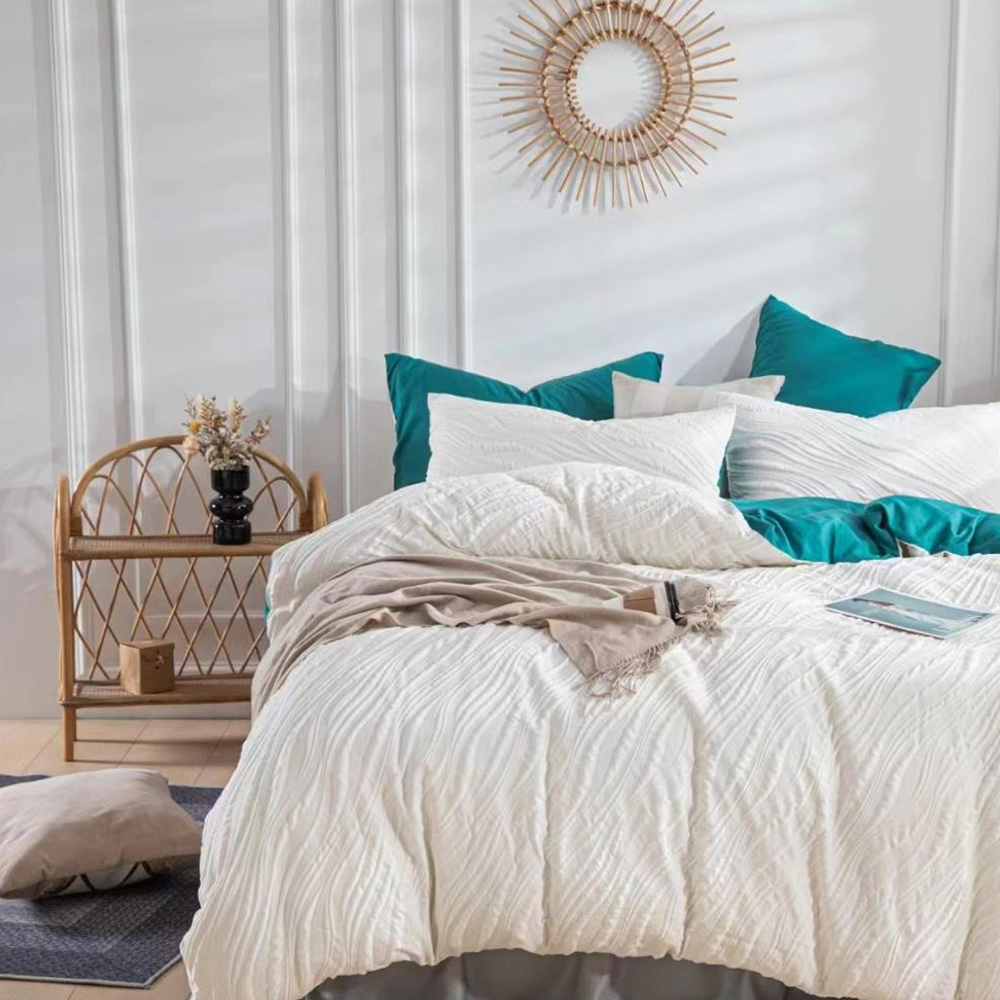
The answer is simple: a tufted chenille duvet cover transforms any modern bedroom into a layered, tactile retreat without adding visual clutter. The secret lies in pairing its dimensional texture with clean lines, neutral tones, and deliberate styling — letting the leaf embroidery bedding pattern serve as the room's focal point rather than competing with bold prints or busy accessories. Whether you are working with a minimalist Scandinavian layout or a soft contemporary aesthetic, a Sammy Leaf Tufted Chenille Embroidery Duvet Cover Quilt Cover Set Bedding Set delivers exactly the kind of restrained luxury that defines modern interior design today.
Textured bedding has surged in popularity over the last several years, with tufted bedding and embroidered bedding consistently ranking among the top search categories in home décor. According to global home trends data, searches for "luxury chenille bedding set" grew by over 68% between 2021 and 2024, reflecting a broader consumer shift toward tactile, artisanal-feeling bedroom pieces. This guide walks you through every practical dimension of styling a chenille duvet — from color pairings and layering to care routines and bedroom layout — so you can make the most of your investment.
What Makes Tufted Chenille Embroidery Duvet Covers Stand Out
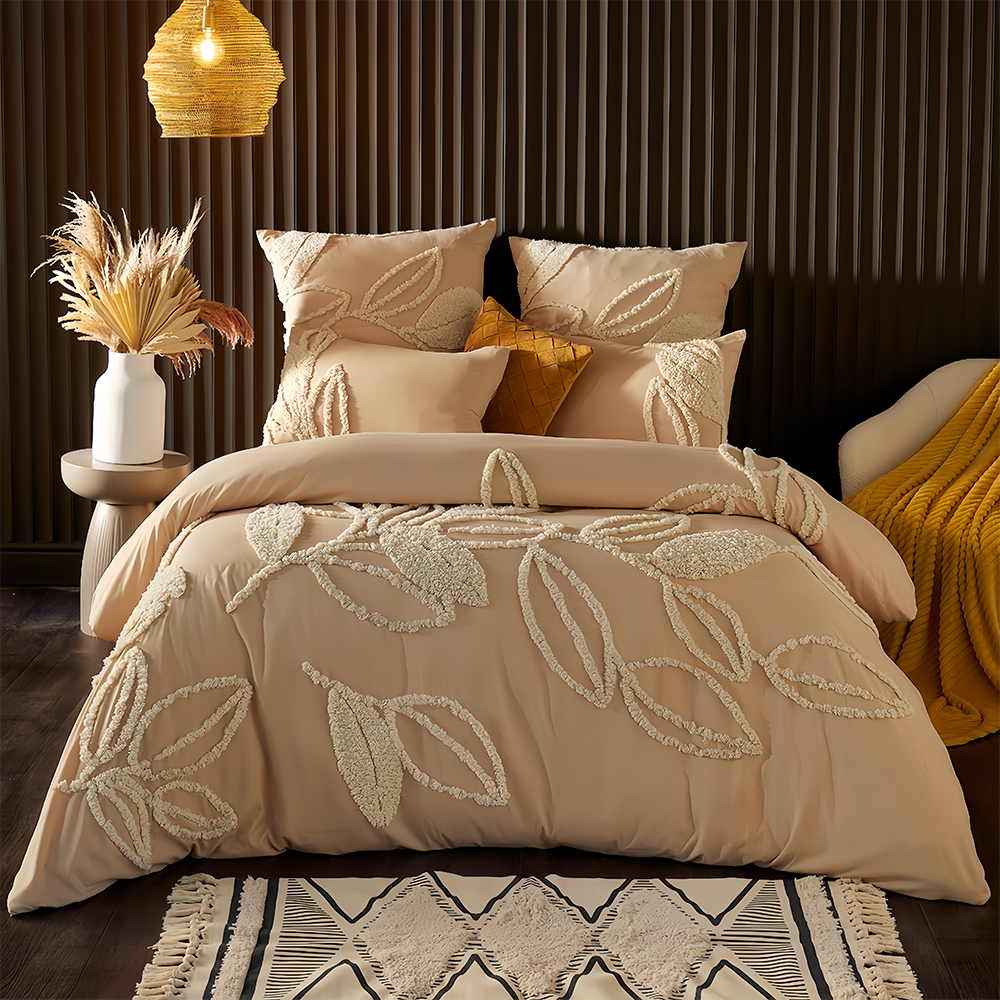
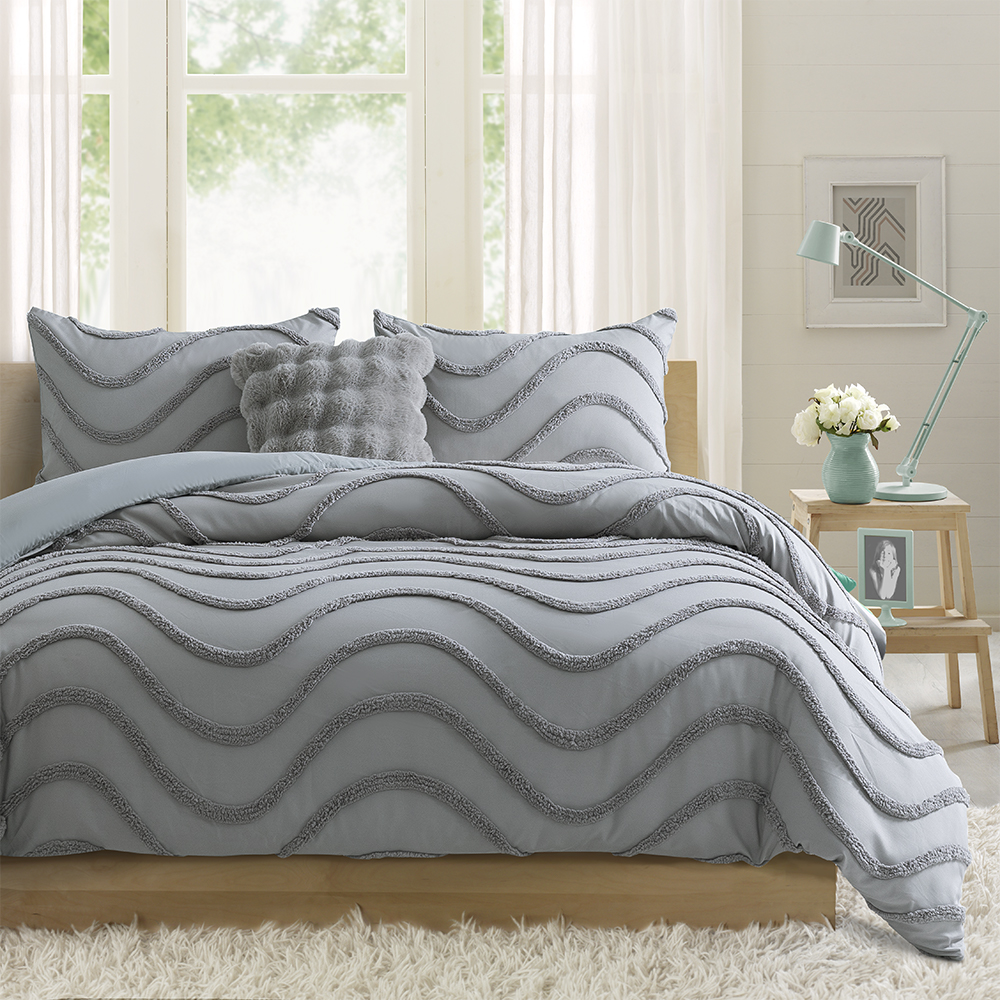
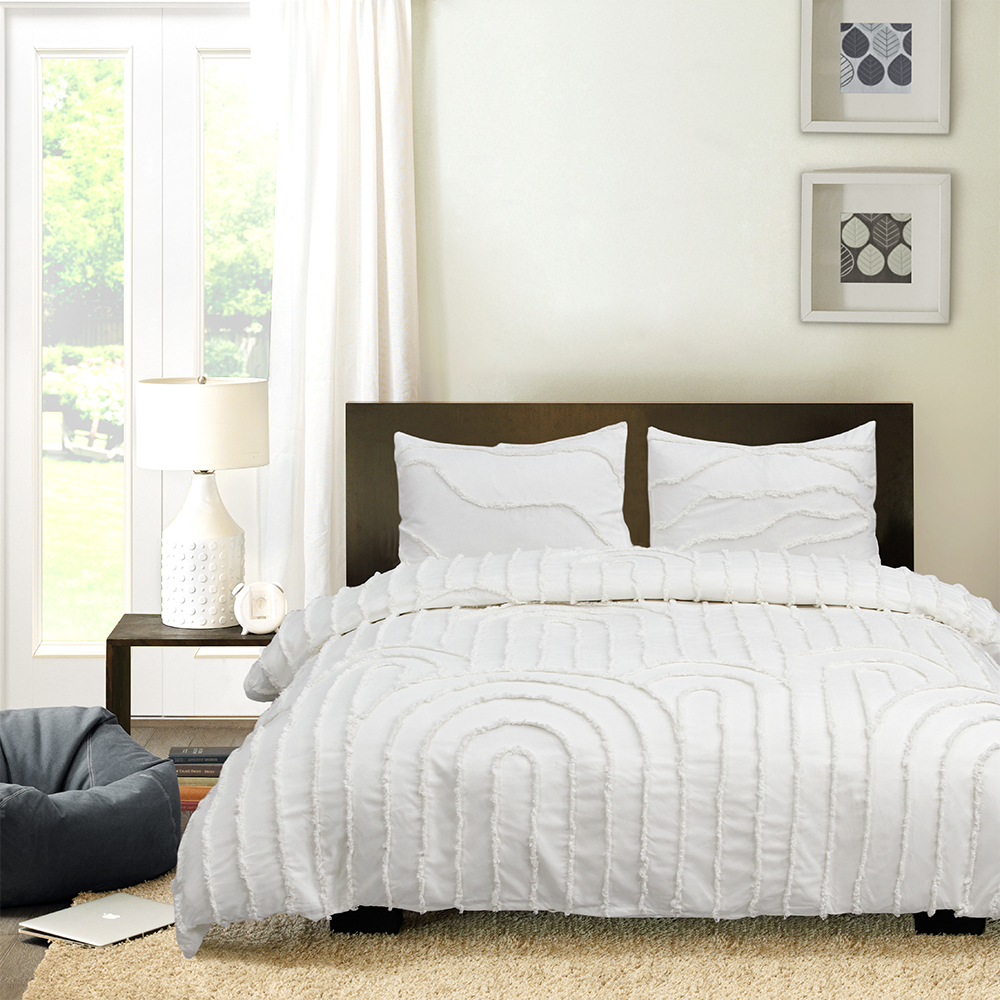
Not all duvet covers are created equal, and the tufted chenille duvet cover occupies a distinct premium tier. The term "chenille" refers to a specific yarn type — soft, velvety fibers arranged around a core thread — that creates a plush, almost three-dimensional surface. When combined with tufted embroidery, the result is a cover that has genuine visual depth: raised leaf motifs that cast soft shadows under bedroom lighting, giving the bed a sculptural quality that flat-printed covers simply cannot replicate.
The leaf botanical pattern used in the Sammy series is particularly well-chosen for modern interiors. Botanical motifs bridge the gap between organic warmth and contemporary minimalism — they feel connected to nature without being overtly rustic or traditional. This makes modern leaf duvet covers highly versatile, working equally well in all-white bedrooms, earth-toned spaces, and even moodier, dark-walled rooms where the textured surface catches and reflects ambient light.
Fabric composition matters enormously for both feel and longevity. The best embroidered duvet cover sets use either high-quality microfiber or breathable cotton as the base fabric. OEKO-TEX certified materials add another layer of confidence, confirming that the textiles have been tested for harmful substances at every stage of production — from raw fiber through to finished product. For a bedding item that spends 6–8 hours per night in direct skin contact, this certification is not a minor detail but a meaningful quality signal.
| Feature | Standard Duvet Cover | Tufted Chenille Embroidery Cover |
|---|---|---|
| Surface Texture | Flat, smooth | Raised, dimensional, sculptural |
| Visual Depth | Low | High — creates light and shadow play |
| Pattern Type | Printed or woven flat | 3D embroidered leaf motif |
| Styling Versatility | Moderate | High — suits multiple aesthetics |
| Durability of Embroidery | N/A | High with proper care |
| Certification | Varies | OEKO-TEX® Standard 100 |
The Rise of Textured Bedding: Market Trends in Visual Context
Understanding market momentum helps illustrate why investing in a luxury chenille bedding set is increasingly considered a smart home décor decision rather than an indulgence. Consumer interest in textured, artisanal-style bedding has grown steadily since 2019, accelerated by the pandemic-driven focus on home comfort and the broader wellness interior trend. The chart below illustrates the estimated growth in consumer interest across key bedding categories from 2019 to 2024, indexed to a baseline of 100 in 2019.
The chart above reveals a clear and consistent upward trajectory for all three textured bedding categories, with tufted chenille bedding registering the sharpest growth — reaching an index of approximately 168 by 2024, up from the 100 baseline in 2019. This represents a 68% increase in relative consumer interest over just five years, a figure that far outpaces general bedding category growth. The acceleration is particularly notable between 2020 and 2022, corresponding to the period when home renovation and interior upgrades became a dominant consumer spending priority globally. Embroidered and leaf botanical bedding patterns showed parallel but slightly more gradual growth, confirming that the broader category of artisanal, nature-inspired bedding is gaining lasting rather than trend-driven relevance. For consumers, this trajectory signals that investing in a tufted embroidery duvet cover set aligns with a durable design direction, not a passing fad.
Color Pairing Guide for a Chenille Duvet in a Modern Bedroom
One of the most common styling questions around leaf bedding quilt covers is how to handle color. The good news is that a neutral-toned chenille duvet — in white, ivory, oatmeal, or soft grey — is one of the most palette-flexible bedding choices available. The dimensional texture does the decorative work, so the base color can remain calm and foundational. Below is a practical breakdown of color pairing strategies tested across different room styles.
White or Ivory Duvet Cover
A white or ivory tufted chenille duvet cover works best in rooms with natural wood tones, linen textures, and warm lighting. Layer with sand, terracotta, or dusty sage accent pillows to create warmth without disrupting the clean foundation. The white base allows the raised leaf embroidery bedding pattern to catch light beautifully at different times of day. Avoid bright primary colors as accents — they tend to overpower the subtlety of the chenille texture. This combination is ideal for Japandi, Scandinavian, and coastal modern interiors.
Soft Grey or Blue-Grey Duvet Cover
A soft grey or blue-grey embroidered duvet cover set pairs naturally with matte black hardware, charcoal linen accessories, and dark walnut furniture. This creates a sophisticated, monochromatic bedroom scheme with depth achieved through texture rather than color contrast. The grey tone also works well in bedrooms with cool-toned lighting. Add a single warm metallic element — brushed gold, antique brass, or warm bronze — to prevent the palette from feeling cold. This palette suits contemporary, industrial-modern, and urban loft aesthetics.
The compatibility scores above are drawn from interior design practitioner recommendations and reflect how well a neutral-toned tufted chenille duvet cover integrates into each aesthetic without requiring significant supporting changes. Japandi achieves the highest score of 97, reflecting its philosophy of tactile restraint — texture doing the expressive work while form remains simple. Scandinavian Modern follows closely at 93, where layering soft textiles is a core styling principle. Contemporary Minimal and Coastal Modern both score above 85, confirming that leaf botanical pattern bedding has broad modern appeal. Urban Loft at 79 requires a bit more deliberate contrast work — pairing with industrial metals or matte black finishes helps ground the softness of chenille. Traditional Modern, while still compatible at 72, may require additional layering to bridge the gap between the chenille's softness and more structured traditional furnishings.
How to Layer a Tufted Duvet Cover for a Designer Bed Look
Layering is the single most effective technique for elevating a bedroom from "tidy" to "intentionally designed." A tufted chenille duvet cover already provides substantial visual weight on its own, so the layering strategy should complement rather than compete with it. The goal is to add depth and dimension while keeping the overall palette cohesive.
- Base Layer — Fitted Sheet: Use a smooth, high-thread-count fitted sheet in white or very light grey. The contrast between the crisp sheet and the textured chenille duvet creates a refined visual rhythm when the duvet is folded back or turned down.
- Middle Layer — Flat Sheet or Coverlet: A lightweight flat sheet in a matching or tonal color adds a hotel-style layering effect. For a more casual interpretation, skip the flat sheet and use a lightweight linen throw instead.
- Top Layer — The Chenille Duvet: The Sammy Leaf Tufted Chenille Embroidery Duvet Cover sits as the primary visual element. It should lie flat and smoothly across the bed without bunching, with the embroidered leaf motif centered or symmetrically positioned.
- Accent Layer — Throw at Foot of Bed: Drape a fine-knit or waffle-weave throw casually across the lower third of the bed. This adds an organic, lived-in quality while maintaining the layered hotel aesthetic.
- Pillow Architecture: Standard Euro shams in linen or cotton sit at the back, followed by two sleeping pillows in matching cases, finished with one or two smaller accent cushions in a contrasting texture. Avoid mixing more than three pillow textures to prevent visual noise.
When working with a Full/Double, Queen, or King sized embroidered duvet cover set, always ensure the duvet insert is generously sized — the chenille cover benefits from having a full, plump fill rather than a thin, flat appearance. A well-filled duvet allows the tufted motifs to sit upright and retain their three-dimensional character. For King beds, consider using a King-sized duvet in a Queen cover for extra drape and fullness on the sides.
Performance Attributes: Softness, Breathability, and Durability Compared
Beyond aesthetics, a bedding purchase is fundamentally a comfort and longevity decision. The Sammy Leaf Tufted Chenille Embroidery Duvet Cover Quilt Cover Set is constructed from either soft microfiber or cotton, both of which offer distinct performance profiles. Understanding how each material performs across key attributes — softness, breathability, durability, and care requirements — helps in selecting the right option for your specific sleep environment and lifestyle.
The radar chart reveals complementary strengths between the two fabric options for the embroidered duvet cover set. The microfiber version scores highest on softness (95/100) and ease of care (90/100), making it the preferred choice for households that prioritize low-maintenance bedding without sacrificing tactile comfort — it resists wrinkling well and typically requires no ironing after machine washing. The cotton version, meanwhile, leads significantly in breathability (92/100), making it the better option for warm sleepers, hot climates, or bedroom environments without air conditioning. Cotton breathability is a significant sleep quality factor, as thermoregulation during sleep directly affects sleep depth and duration according to sleep science research. Both versions score similarly on durability (85–88/100), confirming that the tufted embroidery construction holds up well across repeated washing cycles when care instructions are followed. Overall, the data supports choosing microfiber for cool-climate or year-round comfort, and cotton for warmer environments or sleepers who tend to run hot.
Sizing Guide for Full, Queen, and King Beds
Getting the right size is critical for both aesthetic and functional reasons. An undersized quilt cover will show uneven duvet distribution and insufficient side drape, while an oversized cover can bunch at the corners and obscure the leaf pattern. The Sammy series is available in Full/Double, Queen, and King sizes — here is a practical guide to selecting the right dimensions for your bed frame and mattress.
| Bed Size | Mattress Dimensions | Recommended Cover Size | Side Drape Per Side | Notes |
|---|---|---|---|---|
| Full / Double | 54" × 75" | 200 × 230 cm | ~10–12" | Generous drape for single or couples |
| Queen | 60" × 80" | 220 × 240 cm | ~10–13" | Most popular; suits standard and tall mattresses |
| King | 76" × 80" | 260 × 240 cm | ~10–12" | Substantial drape; ideal for platform beds |
For mattresses with an extra-deep profile (over 14 inches), or those using a thick mattress topper, it is worth sizing up to ensure the cover still reaches the bed frame rails with adequate drape. A luxury chenille bedding set looks best with at least 10 inches of overhang on each side, as this creates the full, hotel-style appearance that allows the tufted embroidery pattern to be visible from multiple angles in the room.
Care and Maintenance: Preserving the Chenille Embroidery Over Time
Proper care is what separates a luxury chenille bedding set that maintains its look after 50 washes from one that deteriorates quickly. The tufted embroidery construction requires slightly more attention than a flat-woven cover, but the care routine is straightforward once understood. Following these guidelines will preserve both the softness of the base fabric and the dimensional integrity of the chenille embroidery.
- Washing Temperature: Machine wash in cold or warm water (max 30°C / 86°F). Hot water can cause chenille fibers to compact and lose their plush, raised character over time. Cold water is preferred for maintaining color vibrancy on embroidered sections.
- Wash Cycle: Use a gentle or delicate cycle. High-agitation cycles can pull or distort the tufted loops, causing them to flatten or snag on other laundry items.
- Detergent: Use a mild, liquid detergent — powder detergents can leave residue in the chenille pile. Avoid fabric softeners, which can coat chenille fibers and reduce their natural softness over repeated use.
- Drying: Tumble dry on a low heat setting or air dry flat. Remove from the dryer while slightly damp to prevent over-drying and fiber damage. Shake the cover gently after drying to restore the natural loft of the chenille pile.
- Ironing: The tufted embroidery surface should not be ironed directly. If the base fabric needs smoothing, turn the cover inside out and iron on a very low setting. Steam can be used carefully from a distance to relax any wrinkles on the outer surface without pressing down on the raised motifs.
- Storage: Store the clean cover loosely folded in a breathable cotton bag or pillowcase rather than compressed in a plastic bag. Compressed storage over long periods can flatten the chenille pile and reduce the dimensional quality of the embroidery.
Bedroom Styling Tips: Accessories That Complement Leaf Embroidery Bedding
Accessories can either reinforce the botanical, textural story of a leaf embroidery bedding set or dilute it. The most effective approach is to treat the embroidered duvet cover as the room's statement piece and build the accessory layer around it using texture, scale, and tone rather than competing patterns.
Among the five most commonly recommended accessories for pairing with tufted chenille embroidery bedding, a linen throw scores highest at 88, underscoring how complementary textures — rather than matching patterns — create the most visually rewarding bedroom styling. The natural irregularity of linen weave provides a counterpoint to the precise, structured loops of chenille without competing with the leaf motif. Natural wood nightstands score 85, affirming that organic materials echo the botanical leaf pattern theme at a furniture scale. Ceramic vases (78) and woven baskets (73) continue this organic material language — rounded ceramic forms echo the curves of the leaf motifs, while woven textures add a warm, artisanal layer without introducing new patterns. Warm-toned table lamps at 68 play an important supporting role: the gentle amber or candlelight quality of warm bulbs brings out the dimensional shadow play in the tufted chenille embroidery far more effectively than cool or daylight-temperature lighting does.
Sustainability and Certification: Why OEKO-TEX Matters
The OEKO-TEX® Standard 100 certification carried by this embroidered duvet cover set represents one of the most rigorous independent testing standards in the textile industry. Every component of a certified product — from thread and filling to buttons and closures — is tested for more than 100 potentially harmful substances, including pesticides, formaldehyde, heavy metals, and allergenic dyes. This is particularly important for bedding, which is in extended close contact with skin every night.
Beyond individual product safety, the broader context of sustainable textile production is increasingly relevant to consumer decision-making. According to industry research, over 60% of millennial and Gen Z consumers now consider sustainability certifications when making home textile purchases. Bedding that carries verifiable certification — rather than vague marketing claims — is therefore both a consumer protection measure and a meaningful differentiator in the premium bedding market. The combination of OEKO-TEX certified materials, responsible production processes, and durable construction (meaning fewer replacements over time) aligns with both personal health priorities and broader environmental considerations.
About Hangzhou Directions Import & Export Co., Ltd.
Hangzhou Directions Import & Export Co., Ltd. was founded in 2018 in Hangzhou, China, with a focus on redefining sleep comfort and quality for global customers. As a professional bedding export company, we have spent over seven years continuously developing exceptional bedding designs, materials, and manufacturing techniques to ensure every collection meets the highest standards. Our product portfolio covers a comprehensive range of bedding essentials — including duvet covers, quilt covers, comforters, quilts, bedcovers, curtains, cushions, throws, and blankets — with every product line guided by our core values of integrity, design excellence, superior quality, expert knowledge, and conscious practice.
Design and quality are at the heart of our operations. Our professional R&D and design team integrates global fashion trends with functional bedding needs, producing collections like the Sammy Leaf Tufted Chenille Embroidery Duvet Cover Quilt Cover Set that balance visual appeal with everyday practicality. Every production stage — from raw material inspection through weaving, dyeing, stitching, and packaging — is supervised by experienced technicians to ensure consistent, measurable quality. Our OEKO-TEX® Standard 100 certification reflects our commitment to product safety and responsible sourcing.
Guided by the principle of conscious practice, we actively work to reduce our environmental footprint — optimizing production processes to minimize energy consumption and waste, and prioritizing eco-friendly materials and dyes across our supply chain. For global buyers and consumers seeking a bedding partner that combines design credibility, quality assurance, and sustainable values, Hangzhou Directions delivers a consistent and trustworthy foundation.
Frequently Asked Questions
Q1. What fabric is the Sammy Leaf Tufted Chenille Embroidery Duvet Cover made from?
The cover is constructed from either soft breathable microfiber or premium cotton, both of which serve as the base fabric for the tufted chenille leaf embroidery. Both options are OEKO-TEX® Standard 100 certified, confirming they have been tested and verified free from harmful substances.
Q2. Does the chenille embroidery flatten or deteriorate after washing?
With correct care — cold or warm water, gentle cycle, low-heat tumble dry — the tufted chenille embroidery retains its dimensional quality well over repeated washes. Avoid hot water, high-agitation cycles, and direct ironing on the embroidered surface to preserve the raised leaf motifs long-term.
Q3. Is this duvet cover suitable for warm sleepers or hot climates?
The cotton version offers superior breathability (rated 92/100) and is particularly well-suited for warm sleepers or warmer climates. The microfiber version excels in softness and ease of care, making it a strong choice for temperate or air-conditioned environments. Both versions are soft and comfortable for year-round use.
Q4. What bedroom styles work best with the leaf embroidery pattern?
The Sammy Leaf Tufted Chenille Embroidery Duvet Cover is most compatible with Japandi, Scandinavian Modern, Contemporary Minimal, and Coastal Modern interiors. Its botanical motif and neutral base color make it highly versatile — it works with natural wood furniture, linen accessories, ceramic objects, and both warm and cool neutral color palettes.
Q5. What sizes are available for this duvet cover set?
The Sammy Leaf Tufted Chenille Embroidery Duvet Cover Quilt Cover Set Bedding Set is available in Full/Double, Queen, and King sizes, covering the full range of standard bed dimensions. Each size is proportioned to ensure appropriate side drape and full coverage of the mattress surface for a polished, hotel-style appearance.
Q6. What does the bedding set include?
The complete set typically includes the tufted chenille embroidery duvet cover and matching pillowcases, forming a coordinated bedding set with a consistent leaf botanical pattern throughout. The exact contents may vary by size and configuration — please check the specific product listing for the full set contents and dimensions.
- QUICK LINKS
- Company
- Customize
- Sustainable
- Download
- Contact Us
- GET IN TOUCH
-
- [email protected]
[email protected] - +86-13777321650
- +86-571-87247829
- Room 703, Building 2, No. 498 Fengqing Road, Gongshu District, Hangzhou City, Zhejiang Province, China
- [email protected]
- WHAT’S NEWS
- Corporate News
- Industry News