+86-13777321650


 русский
  Español

How to Get Compleate Bedding Set | Luxury & Quilted Bedspreads
Content
- 1 What Makes a Decorative Bedding Set Worth Choosing
- 2 Cotton vs Microfiber Bedding: A Practical Comparison
- 3 Luxury vs Standard Bedding Sets: Understanding the Difference
- 4 Modern Bedding Style Guide: Key Design Trends
- 5 Hotel Bedding Sets: What Hospitality Buyers Must Know
- 6 Wholesale Bedding Sets: How to Source Effectively
- 7 Soft Bedding Fabric: Choosing the Right Construction
- 8 About Hangzhou Directions Import & Export Co., Ltd.
- 9 Frequently Asked Questions
What Makes a Decorative Bedding Set Worth Choosing
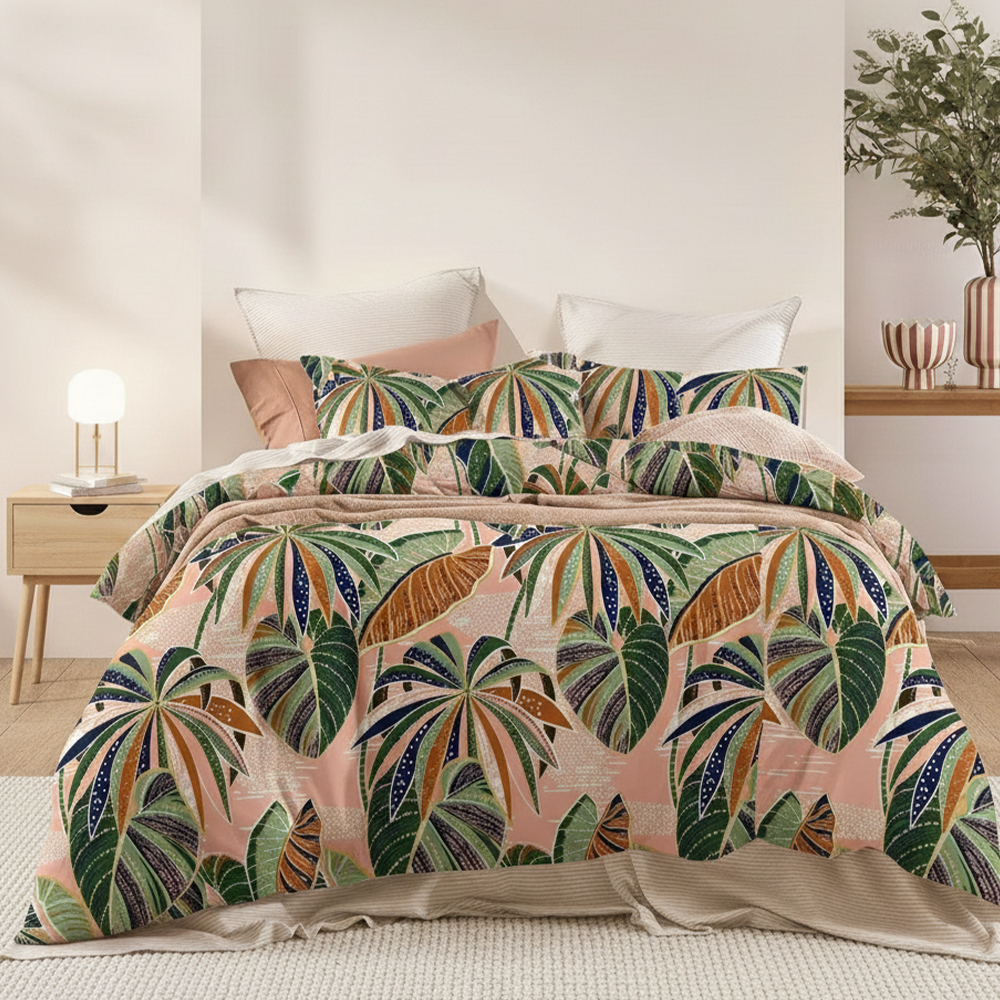
A decorative bedding set is far more than a functional sleep essential. It anchors the visual identity of an entire bedroom, communicates a sense of personal style, and determines the quality of rest a person experiences night after night. Selecting the right set means evaluating fabric construction, fill weight, thread count, finish techniques, and design coherence all at once. For hotels, resorts, and hospitality buyers, the stakes are even higher -- hotel bedding sets must endure industrial laundering cycles while retaining softness, color, and dimensional stability. For home buyers, the priority shifts toward tactile comfort, aesthetic alignment with existing bedroom decor textiles, and long-term durability. Understanding these parameters upfront saves considerable cost and effort in the long run.
The global home textile market continues to expand rapidly. Increased consumer focus on bedroom environments as sanctuaries -- accelerated by lifestyle shifts in recent years -- has pushed demand for luxury bedding sets and premium sleep products to new highs. Whether sourced through a home textile supplier or purchased retail, buyers today expect both performance and aesthetic refinement from every product in their bedroom decor textiles lineup.
This chart illustrates the most influential factors buyers consider when evaluating decorative bedding sets, based on aggregated B2B and retail purchasing surveys. Fabric softness consistently ranks highest at 88%, confirming that tactile comfort remains the primary driver of purchase decisions across both residential and hospitality segments. Durability at 82% reflects the need for bedding that retains its quality through repeated washing and long-term use -- particularly critical for hotel bedding set procurement where laundering frequency is high. Design aesthetic at 79% underscores that today's buyers are unwilling to sacrifice visual appeal for functionality, demanding products that enhance bedroom decor textiles coherently. Eco-certification at 67% reflects the growing segment of sustainability-conscious buyers in Europe, North America, and Australia, who prioritize OEKO-TEX and similar standards. Wholesale MOQ at 58% highlights that for bedding set wholesale buyers, flexible minimum order quantities remain a meaningful differentiator when evaluating home textile suppliers.
Cotton vs Microfiber Bedding: A Practical Comparison
Two fabric types dominate the modern bedding market: cotton and microfiber. Each has distinct advantages depending on the application, climate, and buyer expectations. Understanding the difference between cotton duvet sets and microfiber duvet sets is essential for making informed purchasing decisions, whether for individual home use or large-scale hospitality procurement.
Cotton -- especially long-staple Egyptian or Pima varieties -- offers superior breathability, natural moisture wicking, and a satisfying weight that many sleepers associate with genuine luxury. Thread counts between 300 and 600 represent the sweet spot for cotton duvet sets: dense enough to feel substantial, yet breathable enough for year-round comfort. High-quality cotton also accepts dye beautifully, making it ideal for embroidered bedding sets and intricate jacquard patterns associated with luxury bedding sets and boutique hotel bedding programs.
Microfiber offers a different value proposition. Its ultra-fine synthetic fibers -- typically 0.5 denier or finer -- produce a surface that is genuinely soft, highly wrinkle-resistant, and exceptionally easy to care for. A microfiber duvet set dries faster than cotton equivalents, resists pilling under high-cycle laundering, and retains color vibrancy across dozens of washes. For budget-conscious hospitality buyers who need consistent performance across large fleets of rooms, microfiber delivers outstanding cost-efficiency without sacrificing guest comfort.
| Attribute | Cotton Duvet Set | Microfiber Duvet Set |
|---|---|---|
| Breathability | Excellent (natural fiber) | Moderate |
| Softness | Improves with washing | Immediately silky |
| Wash Durability | 200+ cycles (premium) | 300+ cycles |
| Wrinkle Resistance | Low to moderate | High |
| Eco-friendliness | High (natural, biodegradable) | Moderate (synthetic) |
| Best Application | Luxury / boutique hotel | Budget hotel / mass retail |
Luxury vs Standard Bedding Sets: Understanding the Difference
The distinction between luxury bedding sets and standard options goes beyond thread count marketing language. Genuine luxury in home textile products is defined by the entire supply chain: fiber origin, spinning method, weaving structure, finishing process, and quality inspection rigor. A true luxury set typically uses long-staple combed cotton (with a staple length above 35mm), sateen or dobby weave construction, reactive dyeing for colorfastness above Grade 4, and meticulous cut-and-sew standards that eliminate uneven seams or skipped stitches.
Standard bedding sets, by contrast, use shorter-staple cotton or blended fibers, open-end spinning, and plain weave construction. These choices reduce production costs significantly and make standard sets highly suitable for value-oriented retail, institutional use, or high-turnover rental properties. The key insight for wholesale buyers and home textile suppliers is that "standard" does not mean poor quality -- it means a different performance envelope optimized for a different use case.
For boutique hotel bedding programs, a layered approach often works best: luxury duvet covers and pillowcases for guest-facing presentation, combined with cost-efficient base sheets that guests rarely scrutinize directly. This strategy delivers a high perceived quality experience while keeping procurement budgets sustainable across large room inventories.
This column chart presents projected annual growth rates across key bedding market segments. The eco-certified category leads all segments at 13.1% annual growth, reflecting a fundamental shift in buyer values toward sustainability and verified product safety -- an area where OEKO-TEX Standard 100 certified products command significant competitive advantage. Luxury bedding sets register 11.2% growth, sustained by rising disposable incomes in emerging markets and the expansion of premium lifestyle brands globally. The hotel bedding segment grows at 8.7%, driven by post-pandemic recovery in international tourism and the opening of new hotel properties across Asia-Pacific and the Middle East. Wholesale B2B channels grow at 6.4%, as more procurement teams streamline supply chains through direct relationships with manufacturers and home textile suppliers. Standard bedding segments grow at a more modest 4.8%, indicating market maturation in mass-market channels while premium tiers accelerate.
Modern Bedding Style Guide: Key Design Trends
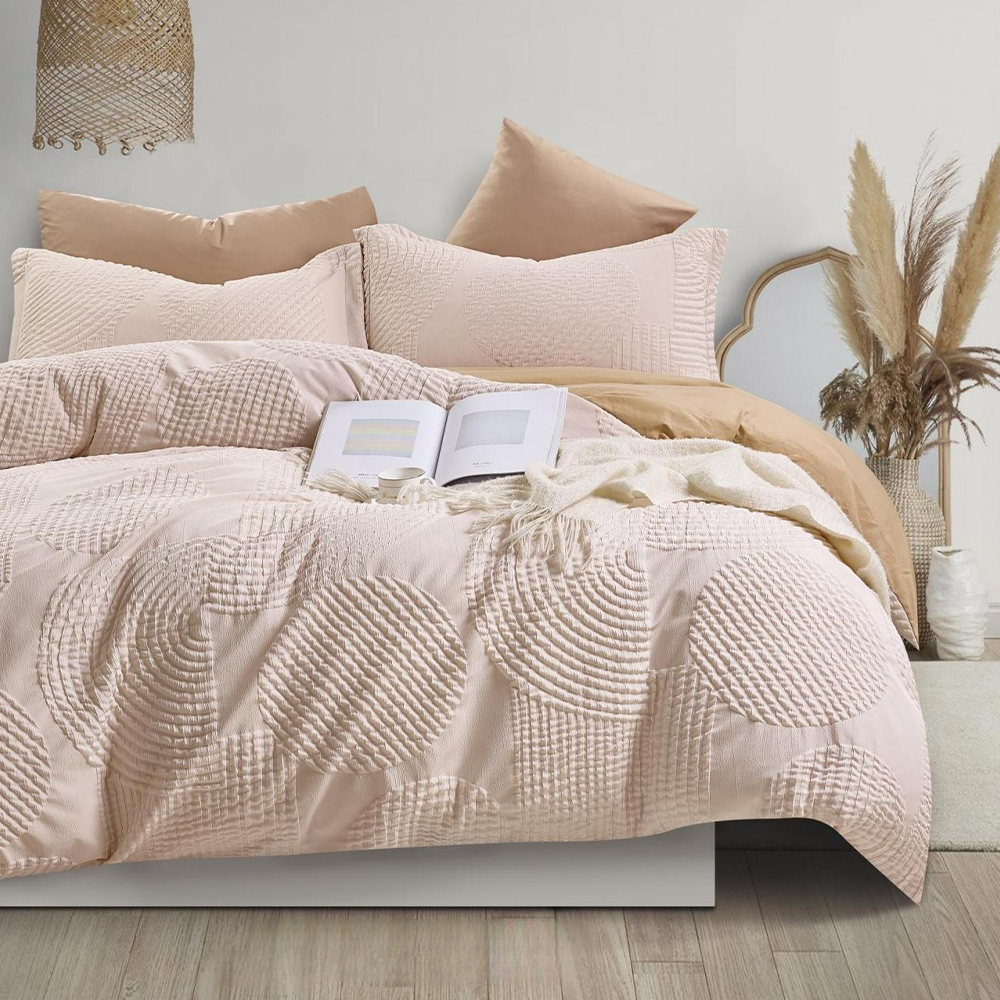
A modern bedding style guide must account for the fact that bedroom aesthetics have become a primary expression of personal identity for today's consumers. Modern bed linens are no longer selected simply to match a wall color -- they are curated as part of a complete interior composition. Dominant design directions currently include textural layering, tonal-color palettes, geometric embroidery, and nature-inspired motifs rendered in muted or earth-adjacent shades.
Textural Contrast and Layering
Pairing a smooth sateen duvet cover with a waffle-knit throw or a quilted coverlet creates depth and visual interest without relying on bold pattern. This approach suits bedroom decor textiles ideas oriented toward minimalist or Japandi-inspired interiors, where restraint in color is compensated by richness in material variation. Buyers sourcing decorative bedding sets for these markets should prioritize suppliers who offer coordinating products -- cushions, throws, and bed runners -- within the same design family.
Embroidery and Surface Detail
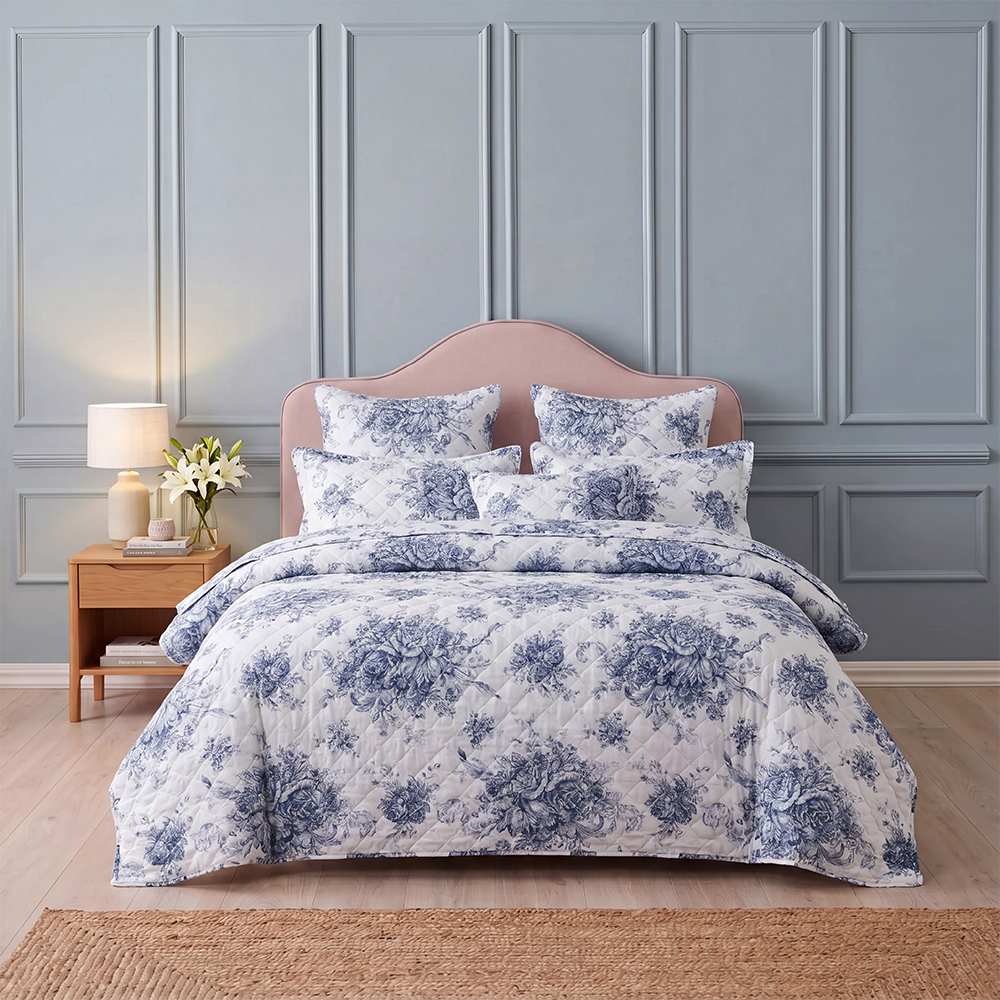
Embroidered bedding sets continue to perform strongly in both the luxury residential and boutique hotel segments. Floral, geometric, and branch motifs executed in tonal or lightly contrasting thread add perceived value without introducing visual complexity that might date quickly. Chain stitch, satin stitch, and cutwork embroidery are particularly associated with boutique hotel bedding programs seeking to communicate artisanal quality and regional identity.
Color Strategy for Modern Bedroom Textiles
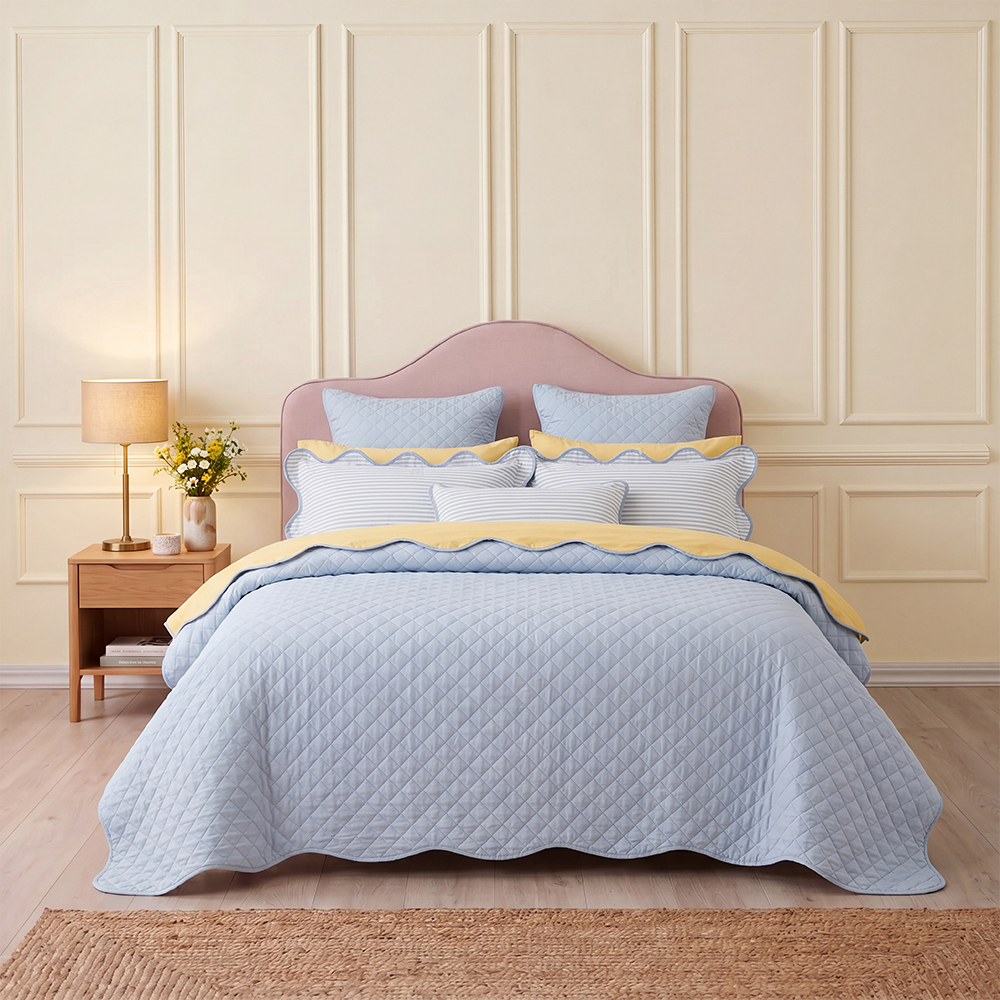
The current color language of modern bed linens leans toward warm whites, sage greens, dusty blues, oat tones, and deep navy. These colors translate well across markets and age groups, photograph attractively for e-commerce, and coordinate naturally with the neutral interior palettes dominant in contemporary residential design. For bedroom decor textiles ideas in hospitality contexts, a classic white or ivory base with tonal embroidery or subtle stripe detailing remains the most universally accepted and guest-approved approach.
- Tonal monochromatic palettes in soft neutrals dominate luxury bedding sets collections
- Stripe and check patterns in muted tones offer a timeless alternative to solid colors
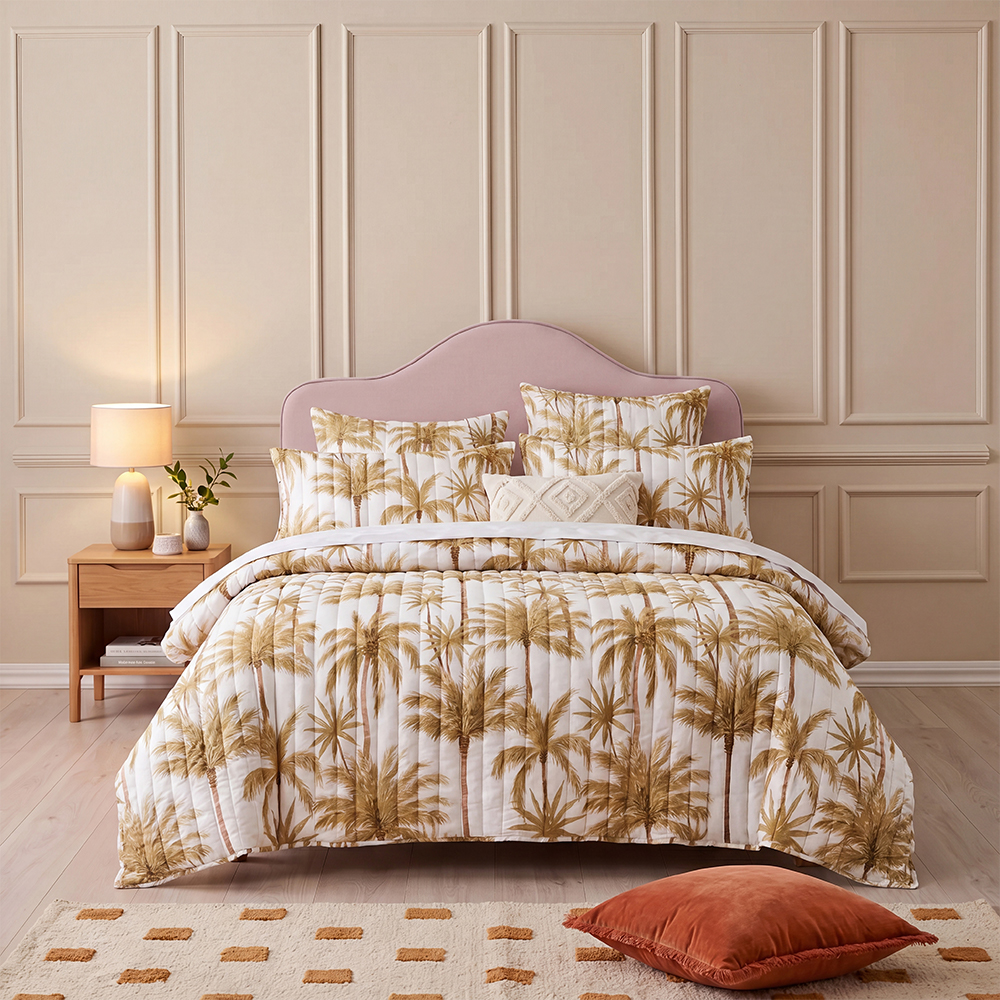
- Nature-inspired prints (botanicals, abstract stone) appeal to wellness-focused bedroom aesthetics
- Geometric embroidery patterns bridge modern and traditional design sensibilities effectively
- Deep jewel tones (emerald, navy, burgundy) are resurgent in premium decorative bedding sets
Hotel Bedding Sets: What Hospitality Buyers Must Know
Hotel bedding sets represent one of the most specification-driven categories in all of home textiles. Unlike retail purchases where personal preference is paramount, hospitality procurement must balance multiple competing requirements: guest comfort, operational durability, laundry cost, brand consistency, and total cost of ownership across multi-year replacement cycles. Understanding how these factors interact is essential for any buyer working with a hotel bedding manufacturer or sourcing through a wholesale bedding sets supplier.
The industry standard for 4-star and above properties typically specifies a minimum 300TC percale or 200TC sateen cotton for top sheets and duvet covers, with a fill power of 500+ for down-alternative inserts. For budget and mid-scale properties, 80/20 poly-cotton blends or pure microfiber with stain-guard finishing deliver acceptable guest satisfaction while significantly reducing linen room operating costs. Boutique hotel bedding programs increasingly differentiate through unique textile selections -- linen-cotton blends, handloom textures, or custom embroideries -- that reinforce the property's identity narrative.
This line chart maps cumulative wash cycle tolerance over a five-year operational period for luxury cotton versus standard microfiber hotel bedding sets. Luxury cotton hotel bedding sets, produced with long-staple fibers and reactive dyeing processes, accumulate approximately 300 wash cycles across five years while maintaining acceptable softness and colorfastness -- a significant advantage for properties with year-round high occupancy rates. Standard microfiber hotel bedding sets reach approximately 255 cumulative wash cycles before showing visible degradation, a lower absolute figure but still highly competitive given the reduced per-unit cost of microfiber sets. The divergence between the two lines widens progressively from Year 2 onward, demonstrating that the durability premium of luxury cotton compounds over time. Hospitality procurement teams evaluating total cost of ownership should factor this multi-year durability trajectory rather than focusing solely on initial unit cost. For high-volume laundering environments processing 80 to 120 linen cycles per room per year, the choice between luxury cotton and standard microfiber has measurable impact on replacement frequency and long-term linen budgets.
Wholesale Bedding Sets: How to Source Effectively
Sourcing bedding set wholesale requires a systematic approach that goes well beyond comparing catalog prices. Effective wholesale procurement from a home textile supplier involves evaluating production capacity, quality control systems, sample turnaround time, certification compliance, and packaging customization capabilities. For buyers working with a wholesale bedding sets supplier for the first time, a structured vetting process significantly reduces the risk of quality inconsistencies or delivery delays in the first order cycle.
Minimum order quantities (MOQs) vary considerably across supplier tiers. Factory-direct suppliers typically set MOQs between 200 and 500 sets per SKU for standard items, while trading companies may offer lower MOQs at slightly higher unit costs. For specialty items such as embroidered bedding sets with custom motifs or luxury bedding sets requiring specific thread counts and finishes, MOQs of 100 to 300 units per colorway are common. Buyers consolidating orders across multiple SKUs can often negotiate blended MOQ terms that reduce inventory risk.
Key Criteria for Evaluating a Home Textile Supplier
- Certification status: OEKO-TEX Standard 100, ISO 9001, GOTS, or equivalent third-party verification
- In-house production vs subcontracting: direct manufacturing offers greater quality control consistency
- Sample lead time: industry standard is 7 to 14 days for stock constructions, 20 to 30 days for custom development
- Colorfastness testing: request results for ISO 105-C06 washing and ISO 105-B02 light fastness standards
- Packaging flexibility: ability to supply OEM-labeled or retail-ready packaging for direct brand integration
For buyers entering new markets or scaling an existing bedding line, developing a long-term relationship with a verified hotel bedding manufacturer that also serves the retail segment provides the greatest flexibility. Such suppliers maintain tooling and construction knowledge across both specification-driven hospitality products and design-forward consumer collections, enabling buyers to consolidate sourcing without sacrificing product differentiation.
This radar chart compares luxury and standard bedding wholesale suppliers across six critical evaluation dimensions relevant to B2B buyers. Luxury suppliers demonstrate clear advantages in quality control (95%), certification compliance (90%), customization capability (88%), and eco-friendly practice (92%), reflecting the deeper investment these manufacturers make in process infrastructure and material sourcing. Standard suppliers, however, outperform on MOQ flexibility (85% vs 65%) and lead time speed (80% vs 70%), making them operationally more accessible for buyers who need faster stock replenishment or smaller initial commitments. The radar visualization makes clear that neither supplier category is universally superior -- the optimal choice depends on the specific requirements of the buyer's business model, product positioning, and customer base. Buyers sourcing for hotel bedding sets programs with high volume and stable demand will typically benefit most from luxury supplier relationships, while emerging retail brands testing new SKUs may find standard suppliers offer a lower-risk entry point. Experienced procurement teams often develop parallel supplier relationships across both categories to maintain both quality ceiling and operational flexibility.
Soft Bedding Fabric: Choosing the Right Construction
The feel of a bedding set against skin is determined not just by fiber type but by the entire fabric construction process: yarn count, weave structure, finishing technique, and finishing chemistry. Understanding these variables allows buyers of soft bedding fabric to make specification decisions that genuinely predict the tactile experience, rather than relying on thread count claims that can be manipulated through yarn ply manipulation.
Weave Structures and Their Tactile Characteristics
Percale weave (plain over-under structure) produces a crisp, cool fabric with a matte finish that breathes exceptionally well -- ideal for warm-climate markets and hot sleepers. A percale cotton duvet set at 300TC feels distinctly different from a sateen cotton duvet set at the same thread count: the sateen's floating warp threads create a smoother, more lustrous surface that many buyers associate with opulence and hotel-style luxury. Sateen weave excels in visual appeal and immediate softness, though it is slightly more prone to snagging than percale constructions.
Jacquard weave incorporates pattern directly into the fabric structure rather than printing it onto the surface, producing designs with dimensional texture and significantly enhanced durability of the pattern over time. Jacquard-woven bedding is a signature element of many luxury bedding sets and boutique hotel bedding collections, as the woven-in motif does not fade, crack, or peel the way screen-printed or digital-printed designs can after repeated washing.
| Weave Type | Softness | Breathability | Appearance | Best Use |
|---|---|---|---|---|
| Percale | Crisp, cool | Excellent | Matte, clean | Warm climates, everyday use |
| Sateen | Silky, lustrous | Moderate | Sheen, hotel-like | Luxury, boutique hotel |
| Jacquard | Textured, rich | Moderate | Patterned, dimensional | Premium decorative bedding sets |
| Flannel | Warm, fuzzy | Lower | Casual, cozy | Cold climates, winter bedding |
About Hangzhou Directions Import & Export Co., Ltd.
Hangzhou Directions Import & Export Co., Ltd. was founded in 2018 in Hangzhou, China, with a clear purpose: to redefine the standards of sleep comfort and textile quality for global buyers. As a professional bedding export company, Directions has built a reputation for delivering premium bedding collections to customers across Europe, North America, the Middle East, and beyond. Over seven years of continuous operation, the company has invested consistently in design development, material innovation, and manufacturing technique refinement to ensure every collection meets the expectations of its international clientele.
The product portfolio covers a comprehensive range of bedroom essentials: duvet covers, quilt covers, comforters, quilts, bedcovers, curtains, cushions, throws, and blankets. This breadth allows buyers to source coordinated collections from a single trusted supplier, simplifying procurement logistics and ensuring design coherence across all bedroom decor textiles. Directions' core values -- integrity, design excellence, superior quality, expert knowledge, and conscious practice -- guide every aspect of operations from initial design brief to final shipment.
Design and quality sit at the heart of the company's identity. A dedicated R&D and design team continuously monitors global interior and textile trends, translating emerging directions into commercially viable product lines that balance aesthetic appeal with practical performance. Production is supervised at every stage by experienced technicians -- from raw material inspection through weaving, dyeing, stitching, and final packaging. OEKO-TEX Standard 100 certification provides buyers with documented assurance that all products meet rigorous human-ecological safety standards, free from harmful substances.
Guided by the principle of conscious practice, Directions is committed to sustainable manufacturing. Production processes are continuously optimized to reduce energy consumption and minimize waste output. Eco-friendly materials and responsible dye systems are prioritized wherever technically and commercially feasible, reflecting the company's belief that responsible supply chain management and commercial success are not in conflict -- they are mutually reinforcing.
Frequently Asked Questions
Q1. What is the difference between a decorative bedding set and a standard bedding set?
A decorative bedding set is designed with deliberate attention to visual presentation -- incorporating elements such as embroidery, woven patterns, coordinating cushion covers, and bed runners that elevate the aesthetic of a bedroom. A standard bedding set prioritizes functional coverage and ease of care, typically featuring plain or simply printed designs. Decorative sets are commonly selected for guest rooms, master bedrooms, and hospitality environments where visual impact supports the overall interior design concept.
Q2. What thread count is best for hotel bedding sets?
For 4-star and 5-star hotel properties, a thread count between 300 and 400 in a percale or sateen weave is generally considered the optimal balance of softness, durability, and laundry performance. Thread counts significantly above 400 do not always deliver proportionally better results in high-cycle laundering environments. For mid-scale properties, well-constructed microfiber duvet sets at 110gsm to 130gsm fabric weight perform reliably across 300 or more wash cycles without significant quality degradation.
Q3. What certifications should I look for when buying bedding set wholesale?
OEKO-TEX Standard 100 is the most widely recognized certification, confirming that every component of the product -- including threads, dyes, and accessories -- has been tested for harmful substances. ISO 9001 certification indicates that the manufacturer operates under a structured quality management system. For eco-conscious buyers, GOTS (Global Organic Textile Standard) certification confirms the use of organic fibers and responsible processing. Always request valid certification documents and verify their authenticity through the issuing body's official online database.
Q4. Can I order embroidered bedding sets with custom designs in wholesale quantities?
Yes. Most established home textile suppliers offer embroidery customization services for wholesale orders, typically with MOQs starting from 100 to 300 pieces per design depending on embroidery complexity and placement. Custom embroidery artwork is usually digitized from customer-provided vector files, and an approval sample is produced for buyer confirmation before bulk production commences. Lead times for custom embroidered bedding sets range from 30 to 45 days, longer for intricate multi-color designs.
Q5. How do modern bed linens differ from traditional bedding styles?
Modern bed linens favor clean lines, tonal palettes, and material-focused design rather than elaborate multi-color patterns or heavy ornamental detailing. Constructions are typically lightweight for year-round versatility, and design motifs (when present) are subtle -- fine stripes, tonal embroidery, or minimal geometric patterns. Traditional bedding, by contrast, often features richer color contrasts, heavier fabric weights, and more complex decorative embellishment. The defining quality of modern bedding style is restraint: allowing material quality and color harmony to carry the visual statement.
Q6. What is the typical minimum order quantity when sourcing from a wholesale bedding sets supplier?
MOQs vary depending on the product type and supplier tier. For standard decorative bedding sets in stock constructions and colors, MOQs from factory-direct suppliers typically range from 200 to 500 sets per SKU. For custom colors, constructions, or sizes, MOQs of 300 to 600 sets are more common. Trading companies may offer lower entry MOQs of 50 to 100 sets but generally at higher unit costs. Many experienced home textile suppliers offer flexible blended MOQ arrangements for buyers consolidating multiple SKUs in a single purchase order.
- QUICK LINKS
- Company
- Customize
- Sustainable
- Download
- Contact Us
- GET IN TOUCH
-
- [email protected]
[email protected] - +86-13777321650
- +86-571-87247829
- Room 703, Building 2, No. 498 Fengqing Road, Gongshu District, Hangzhou City, Zhejiang Province, China
- [email protected]
- WHAT’S NEWS
- Corporate News
- Industry News