+86-13777321650


 русский
  Español

The Complete Guide to Throws & Blankets: Choosing, Using, and Caring for Your Bedding Layer
Content
- 1 The Complete Guide to Throws & Blankets: Choosing, Using, and Caring for Your Bedding Layer
- 1.1 Throws vs. Blankets: Understanding the Difference
- 1.2 Fabric Types: What Your Throw or Blanket Is Made From Matters
- 1.3 Understanding GSM: How Weight Determines Warmth
- 1.4 How to Choose the Right Throw or Blanket for Your Needs
- 1.5 Styling Throws in Your Living Space
- 1.6 Blanket Layering Systems for Year-Round Bedroom Comfort
- 1.7 Care and Maintenance: Washing, Drying, and Storage
- 1.8 Sustainability in Throws and Blankets: What to Look for in 2026
- 1.9 Throws and Blankets as Gifts: What Makes a Good Choice
- 1.10 Frequently Asked Questions About Throws & Blankets
The Complete Guide to Throws & Blankets: Choosing, Using, and Caring for Your Bedding Layer
The straightforward answer: throws and blankets are not interchangeable products. A throw is a compact decorative textile — typically 50 × 60 inches — designed for accent use on sofas, chairs, or at the foot of a bed. A blanket is a full-sized functional bedding layer available in twin through king dimensions, engineered primarily to provide consistent warmth across a complete sleeping surface. Understanding this distinction is the starting point for making the right choice for every room and season in your home.
In 2026, throws and blankets represent one of the fastest-growing segments within the global home textile market, which was valued at approximately $130 billion in 2023 and continues to expand steadily. Consumer preferences have shifted meaningfully toward natural fibers, certified sustainable materials, and multi-functional pieces that serve both aesthetic and practical roles. This guide covers everything you need to know — fabric types, sizing, care, selection by use case, and maintenance — to choose the right throw or blanket for your household and ensure it delivers years of value.
Throws vs. Blankets: Understanding the Difference
The confusion between throws and blankets is extremely common, partly because they are often sold side by side and partly because both products serve overlapping comfort functions. The clearest way to distinguish them is by size, weight, and primary use context.
The Throw: Small Format, High Versatility
A throw typically measures between 48 × 60 inches and 60 × 80 inches, with the 50 × 60 inch format being the most commonly stocked standard in retail. Its compact size makes it ideal for draping over the arm of a sofa, folding across the end of a bed for decorative layering, or wrapping around a single person during light evening use. Throws are not designed to cover a full mattress surface for sleep — their value lies in accessibility, portability, and the aesthetic dimension they contribute to living spaces.
In living room contexts, a well-chosen throw performs double duty: it provides warmth when needed while simultaneously functioning as a textile accent piece that adds color, texture, and visual softness to a seating arrangement. The decorative value of throws has made them one of the most popular home textile gifts, particularly during seasonal gifting periods, because they are universally appealing, practical, and adaptable to a wide range of interior styles.
The Blanket: Full Coverage, Sleep-Oriented Function
A blanket is sized to cover a mattress fully, with standard dimensions following the same bed-size conventions as sheets and duvet covers: twin (66 × 90 inches), full/queen (90 × 90 inches), and king (108 × 90 inches). Blankets are used as standalone warmth layers under or over a duvet, as a primary warm layer in mild climates, or layered over sheets for customizable temperature control across seasons.
Unlike duvets, which encase loose fill material, blankets are constructed from a single woven or knitted fabric layer — which means their warmth is determined entirely by fiber type, yarn weight, and weave structure rather than fill loft. This construction makes blankets more versatile for layering, easier to wash at home, and less bulky for storage compared to duvet-based systems.
Fabric Types: What Your Throw or Blanket Is Made From Matters
The fabric determines how a throw or blanket feels, performs thermally, ages over time, and impacts the environment. The range of materials available in 2026 spans from heritage natural fibers to advanced sustainable textiles, each with distinct advantages depending on your use case and priorities.
Cotton: The All-Around Performer
Cotton remains the most widely used fiber in throws and blankets globally. Its combination of breathability, softness, machine washability, and hypoallergenic properties makes it the natural choice for year-round use. Standard cotton throws and blankets are highly breathable, absorb moisture without retaining it for extended periods, and maintain their color and texture across repeated washing cycles with proper care.
Organic cotton — grown without synthetic pesticides or fertilizers — has grown significantly in consumer preference. The organic bedding segment has expanded by over 20% annually in North American and European markets over recent years, driven by health awareness and environmental concern. Organic cotton throws and blankets carry GOTS (Global Organic Textile Standard) or OEKO-TEX® Standard 100 certification when produced responsibly, confirming that no harmful chemical residues remain in the finished textile.
Bamboo: Thermoregulating and Naturally Antimicrobial
Bamboo-derived fabrics — primarily bamboo viscose and bamboo lyocell — offer a combination of properties that few natural fibers can match: they are naturally thermoregulating, moisture-wicking, antimicrobial, and exceptionally soft against skin. Bamboo fabric breathes actively with body temperature, moving warmer when the environment is cool and cooler when it is warm — making bamboo throws an excellent choice for hot sleepers or for households in climates with significant temperature swings between seasons.
Bamboo's natural antimicrobial properties reduce odor retention between washes, which is particularly valuable for throws used regularly in living areas where washing frequency is lower than for sleep bedding. One important note: bamboo viscose processing uses a chemical-intensive method, while bamboo lyocell uses a closed-loop solvent process with much lower environmental impact. When sustainability is a priority, seek bamboo lyocell specifically rather than bamboo viscose.
Wool and Merino: Premium Warmth with Natural Intelligence
Wool is the most thermally intelligent natural fiber available for blankets. Wool fibers regulate body temperature bidirectionally — trapping warmth in cold conditions and releasing excess heat and moisture in warm conditions. Merino wool, from Merino sheep breeds, is the finest-grade wool widely available in consumer bedding, with fiber diameters typically measuring 17 to 23 microns — fine enough to be worn directly against sensitive skin without the itching characteristic of coarser wool grades.
Wool's natural moisture-management capacity is remarkable: it can absorb up to 30% of its own weight in moisture while still feeling dry to the touch. This property makes wool blankets particularly effective for managing the nighttime moisture that disrupts sleep quality. Wool blankets are generally dry-clean or cold-hand-wash only for high-quality grades, which affects their practical maintenance profile compared to machine-washable cotton alternatives.
Fleece (Including Recycled Fleece)
Fleece — a knitted synthetic fabric typically made from polyester — is soft, lightweight, and extremely quick-drying. Standard fleece throws are among the most accessible entry points in the category, offering plush comfort at an approachable level. Recycled polyester fleece, made from post-consumer PET bottles, has gained significant market share as a more environmentally responsible option within the synthetic category — providing the same practical performance while reducing virgin plastic production.
The key limitation of fleece is breathability: polyester does not absorb moisture and instead moves it (moisture-wicking behavior varies by construction). In warm environments or for sleepers who run hot, fleece can create an uncomfortably warm microclimate against the skin. Fleece is best suited for cool-climate supplemental warming rather than primary year-round sleep use.
Linen: Lightweight, Breathable, and Built for Longevity
Linen throws and blankets occupy the premium end of the market for warm-climate and year-round breathable use. Linen is woven from flax plant fibers, which are among the strongest natural textile fibers available — linen actually strengthens with washing over the first several years of use. A linen throw used and cared for properly can realistically remain in excellent functional condition for 10 to 20 years.
The breathability of linen is unmatched among standard bedding fabrics, making it the preferred choice for hot climates, summer use, and households where year-round temperature management is a priority. Its initially textured hand softens progressively with each washing and use cycle, developing the characteristic relaxed softness that makes vintage linen so valued.
| Fabric | Warmth | Breathability | Avg. Lifespan | Best Use | Machine Washable |
|---|---|---|---|---|---|
| Cotton | Light–Medium | Excellent | 3–5 years | Year-round, all ages | Yes (40°C) |
| Organic Cotton | Light–Medium | Excellent | 4–6 years | Sensitive skin, children | Yes (40°C) |
| Bamboo | Light | Very Good | 3–5 years | Hot sleepers, eco-buyers | Yes (30°C) |
| Merino Wool | High | Very Good | 8–12 years | Cold climates, premium use | Hand wash / dry clean |
| Fleece (Recycled) | Medium–High | Moderate | 2–3 years | Casual, gifting, cool climates | Yes (30°C) |
| Linen | Light | Outstanding | 10–20 years | Warm climates, summer | Yes (40°C, gentle) |
Understanding GSM: How Weight Determines Warmth
GSM — grams per square meter — is the standard measure of fabric weight used across the global textile industry. For throws and blankets, GSM is the most reliable single indicator of warmth level when comparing products within the same fabric category. Understanding how to interpret GSM values allows for more precise selection based on season, climate, and personal temperature preference.
Lightweight: 150–280 GSM
Throws and blankets in this weight range are suited for spring and summer use, for layering over a sheet in an air-conditioned room, or as accent pieces in warm climates. Cotton waffle throws, bamboo throws, and linen blankets typically fall in this range. They provide comfort without excessive warmth retention and are the most breathable option available in the category.
Medium Weight: 280–450 GSM
The most versatile weight range for general household use. Medium-weight throws and blankets work across three seasons — autumn, winter, and spring — and are the most commonly purchased segment. Cotton flannel blankets, bamboo blended throws, and lighter wool blends typically fall here. A well-chosen medium-weight blanket at around 350 GSM in organic cotton provides year-round utility in most temperate climates.
Heavyweight: 450–700 GSM and Above
Heavyweight blankets — including chunky knit throws, dense wool blankets, and high-pile fleece — are designed for cold climates, winter primary use, or as the outer warmth layer in a bedding system. The significant weight of these products also contributes a mild compression comfort that some sleepers find genuinely beneficial for relaxation. Merino wool blankets at the top of this range deliver outstanding warmth-to-weight efficiency compared to synthetic alternatives of equivalent GSM.
Fig. 1 — Warmth rating (0–10) vs. GSM range across common throw and blanket fabric types
How to Choose the Right Throw or Blanket for Your Needs
Selecting the right throw or blanket is a more nuanced decision than simply picking a color and size. The following criteria-based framework helps match product to need more precisely.
Matching Product to Room and Use Context
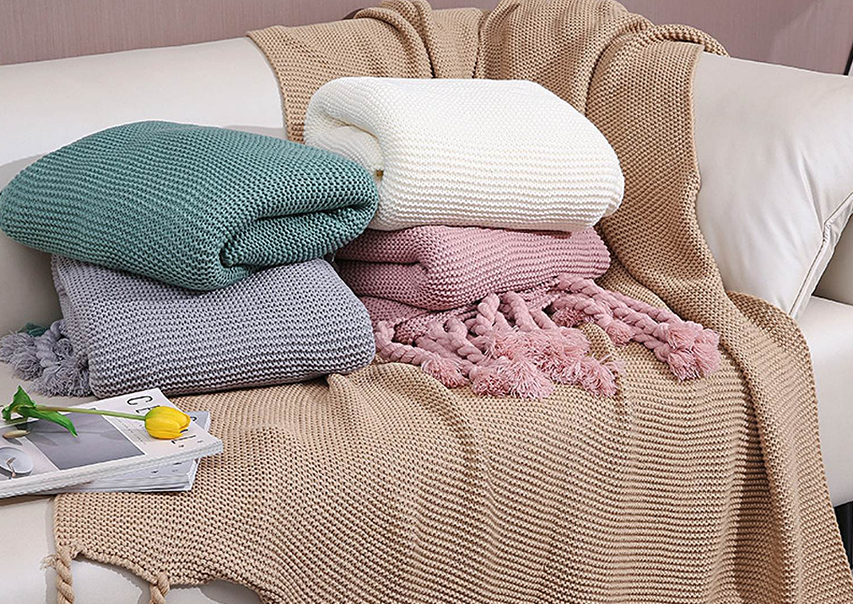
Living room throws prioritize aesthetics alongside comfort — texture contrast with the sofa fabric, color cohesion with the room palette, and the ability to be draped attractively when not in active use. A chunky knit cotton throw in a neutral tone adds textural depth to a minimalist sofa; a woven herringbone wool throw introduces warmth and visual complexity to a more classic interior.
Bedroom blankets should be chosen primarily for functional performance — thermal properties appropriate for the climate, compatibility with the existing bedding system, and maintenance practicality. A breathable cotton or bamboo blanket works well as a top layer in warm months; a medium-weight wool or wool-blend blanket provides effective supplemental warmth in winter without the bulk of an additional duvet.
Outdoor and travel throws require different criteria: durability against UV exposure, resistance to moisture, easy compactability for transport, and quick-drying properties. Cotton canvas throws, weather-resistant recycled synthetic blankets, and tightly woven wool travel throws are the most appropriate options for outdoor or travel contexts.
Selecting for Your Sleep Temperature Profile
Sleep temperature preferences vary significantly between individuals. Hot sleepers — those who wake frequently feeling too warm — need lightweight, breathable options: bamboo, linen, or a lightweight cotton waffle at 200 to 280 GSM. Cold sleepers benefit from wool or a heavyweight cotton blanket at 400 GSM and above. For couples with differing temperature preferences, a modular blanket system — lightweight over a warm sleeper, heavier over a cold sleeper — is the most practical solution.
Considering Household Needs: Children, Pets, and Allergies
Households with young children should prioritize OEKO-TEX® certified non-toxic materials — organic cotton and certified bamboo are the most appropriate choices. These certifications confirm that no harmful chemical residues from dyes, processing agents, or finishing chemicals are present in the finished textile at levels that could affect health.
For households with pet-sharing furniture, durability and machine washability should drive selection — cotton and recycled fleece are the most practical choices. Wool and linen throws, while durable, require more delicate washing and are less tolerant of the physical stress that pets inflict through claws and active movement. For allergy-sensitive households, latex-free, dust-mite-resistant constructions in tightly woven cotton or bamboo are preferable to open-knit or loosely woven structures that accumulate allergens more readily.
Styling Throws in Your Living Space
A throw is one of the most accessible and high-impact tools available for refreshing a room's visual character without significant investment. The way a throw is styled communicates as much about a space as the furniture itself — a carelessly bundled throw reads differently from a precisely folded one, and the right choice of texture and color can anchor or elevate an entire seating arrangement.
The Casual Drape
Draping a throw loosely over the arm of a sofa — with approximately one third hanging down the side and two thirds folded across the seat — creates an approachable, lived-in aesthetic suited to relaxed interior styles. Chunky knit and waffle cotton throws work particularly well with this method because their texture reads clearly even when casually arranged.
The Folded End-of-Bed Placement
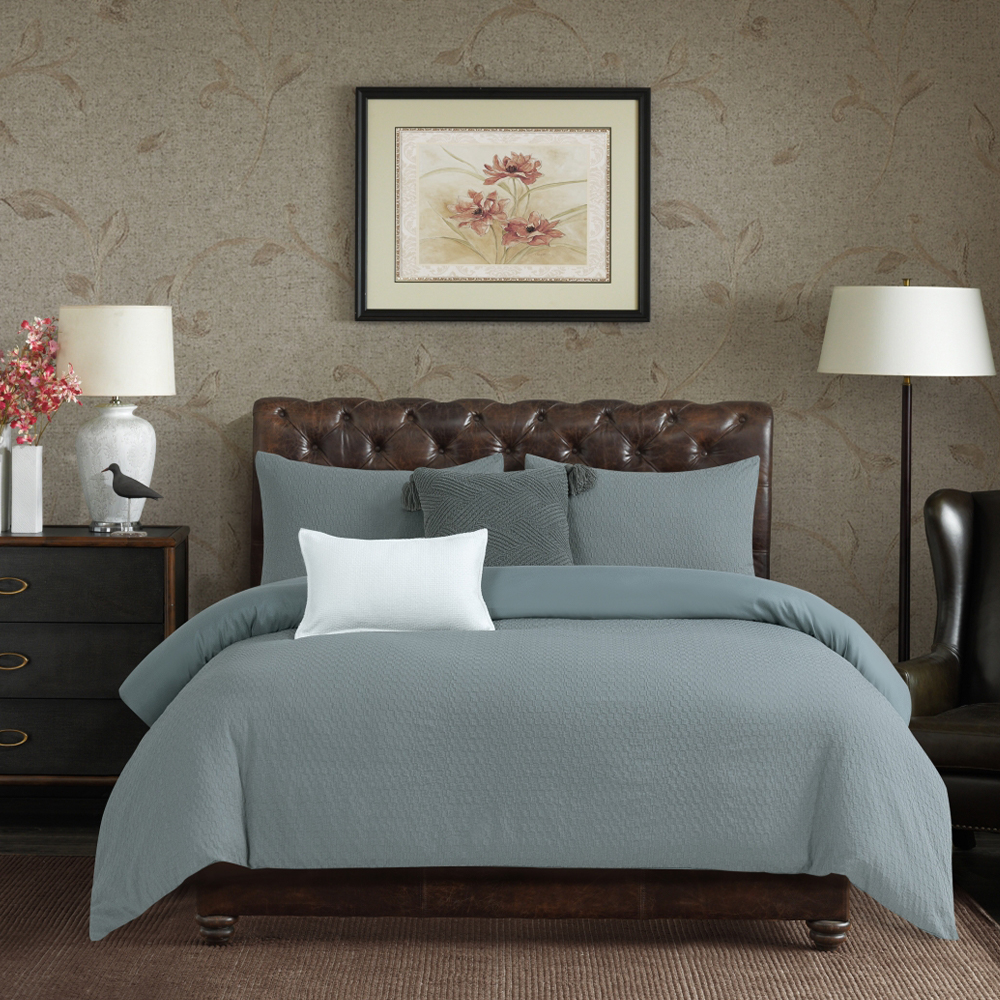
Folding a throw in thirds lengthwise and placing it across the foot of the bed is the standard hotel-inspired approach that works in most bedroom styles. It adds a finishing layer to the bed styling, introduces a contrasting color or texture element, and is immediately accessible for warmth without disturbing the main bedding. A throw in a complementary tone to the duvet cover creates visual harmony; one in a contrasting color or pattern creates intentional visual interest.
Layering Multiple Throws
Styling multiple throws of different textures in the same space works well when they share a coherent color palette. A smooth woven throw paired with a chunky knit in tonal colors on the same sofa creates depth without visual chaos. The general guideline is: vary texture, coordinate color. Mixing too many colors with too many textures produces visual competition that makes a space feel busy rather than layered.
Blanket Layering Systems for Year-Round Bedroom Comfort
Modern sleep comfort science increasingly supports a layered bedding approach over a single heavy duvet system. Layering allows for precise temperature adjustment by simply adding or removing a layer, rather than replacing an entire duvet when seasonal temperatures shift. Blankets are the most flexible component in any layering system because they can be added or removed without disrupting the primary bedding arrangement.
The Three-Layer System
A practical year-round layering system uses three components: a base sheet layer (fitted and flat sheet), a mid-weight blanket for temperature modulation, and a lighter duvet or comforter for the outer warmth layer. The blanket sits between the flat sheet and the duvet, functioning as a removable thermal buffer. In summer, remove the duvet and use only the sheet and blanket. In winter, add the duvet over the blanket for maximum warmth.
The Two-Layer Summer System
In warm climates or during summer months, a flat sheet combined with a lightweight cotton or bamboo blanket at 200 to 280 GSM provides sufficient warmth for most sleepers without the heat retention of a full duvet. This system is also simpler to launder — both components are machine washable and quick-drying compared to a duvet insert.
Fig. 2 — Consumer preference for layered blanket systems vs. single duvet: survey trend 2021–2026 (%)
Care and Maintenance: Washing, Drying, and Storage
Proper care is the single most controllable factor determining how long a throw or blanket maintains its quality. Most premature degradation of throws and blankets is directly attributable to avoidable care mistakes — primarily high-heat washing or drying and inappropriate detergent selection.
Washing Guidelines by Fabric Type
- Cotton and organic cotton: Machine wash at 40°C on a gentle cycle. Use a pH-neutral detergent without bleaching agents. Avoid fabric softeners on organic cotton — they deposit chemical residues that reduce breathability over time. Tumble dry on low heat or air-dry flat to prevent shrinkage.
- Bamboo throws: Machine wash at 30°C on a delicate cycle. Bamboo fabric is sensitive to heat — water temperatures above 40°C accelerate fiber degradation and can cause shrinkage. Air-dry only; avoid the dryer to preserve the silky texture characteristic of bamboo textiles.
- Wool and merino wool: Hand wash in cool water with a specialist wool detergent, or machine wash on a dedicated wool cycle at 30°C maximum. Lay flat to dry — hanging a wet wool blanket causes the weight of the water to stretch the fibers irreversibly. Never tumble dry wool; the combination of heat and agitation causes felting and irreversible shrinkage.
- Fleece (including recycled): Machine wash at 30°C on a gentle cycle. Use a microfiber laundry bag when washing recycled polyester fleece to capture microplastic fibers released during washing — an important environmental practice. Tumble dry on low heat or air-dry.
- Linen: Machine wash at 40°C on a gentle cycle. Linen softens with each wash — the more it is washed, the better it feels. Tumble dry on low heat is acceptable for most linen; remove while slightly damp and smooth out any wrinkles by hand before finishing air-drying.
How Often to Wash Throws and Blankets
Throws used in living areas — on sofas and chairs, in contact with clothed bodies — can be washed every 2 to 4 weeks under normal use, or as needed following spills or visible soiling. Blankets used directly in contact with the sleeping body should be washed every 2 to 4 weeks, similar to a top sheet. Blankets used over a top sheet or duvet cover can be washed less frequently — every 4 to 6 weeks — as they accumulate less direct biological exposure.
Storage Between Seasons
Always store throws and blankets clean and completely dry. Residual moisture in stored textiles creates ideal conditions for mold and mildew growth, which can permanently damage fibers and create persistent odors that washing cannot fully eliminate. Store in breathable cotton or muslin storage bags rather than plastic, which traps moisture. Add cedar blocks or sachets of dried lavender as natural deterrents against moths and pests — particularly important for wool storage. Fold loosely rather than tightly compressed to preserve fiber loft and prevent permanent crease lines in the textile.
Sustainability in Throws and Blankets: What to Look for in 2026
Consumer awareness of textile sustainability has shifted decisively in recent years. Research from McKinsey's sustainability tracker shows that 67% of consumers in developed markets in 2025 factor environmental impact into textile purchase decisions. In 2026, the most meaningful sustainability indicators to look for when purchasing throws and blankets are as follows.
Material Certifications
OEKO-TEX® Standard 100 confirms that the finished textile — including all dyes, processing agents, and accessories — contains no harmful substances above threshold levels safe for skin contact. GOTS certification additionally verifies organic fiber sourcing and environmentally and socially responsible processing throughout the supply chain. Both certifications provide meaningful assurance of material safety and production quality discipline.
Fiber Sourcing Transparency
Traceable supply chains — where the manufacturer can identify the specific fiber source and processing facilities — are a strong signal of quality discipline and responsible sourcing. Leading sustainable bedding manufacturers now provide supply chain maps or sourcing disclosure on their product pages, a practice that was rare five years ago and is becoming mainstream in 2026.
Longevity as a Sustainability Metric
The most sustainable throw or blanket is the one that lasts the longest and requires the fewest replacements. A linen throw that lasts 15 years has a dramatically lower per-year environmental footprint than a synthetic microfiber throw replaced every 18 months, regardless of what the initial product's manufacturing claims state. Choosing durable natural fibers over inexpensive synthetics is consistently the most impactful sustainability decision available in this category.
End-of-Life Options
Natural fiber throws and blankets — cotton, linen, wool — are fully biodegradable and can be composted at end of life or donated to textile banks. Synthetic fleece products are more complex to recycle, though programs processing post-consumer synthetic textiles into industrial insulation and padding materials are expanding in coverage in 2026. Check with the manufacturer or local textile recycling providers for current options before discarding end-of-life products.
Throws and Blankets as Gifts: What Makes a Good Choice
Throws and blankets rank consistently among the most well-received home textile gifts across all demographic groups. Their broad appeal comes from the combination of universal utility, aesthetic appeal, and the comfort association that makes them feel personal without requiring specific size or preference knowledge. A well-chosen throw communicates warmth and thoughtfulness in a way that few other household gifts can match.
For Housewarming Gifts
A quality cotton or bamboo throw in a neutral tone — ivory, natural, soft grey — is an ideal housewarming gift because it adapts readily to any interior color palette and provides immediate practical value. Oversized throws at 60 × 80 inches provide more generous coverage and are perceived as more premium than standard 50 × 60 inch options.
For Seasonal and Holiday Gifts
Heavier chunky knit or fleece throws in seasonal colorways — deep tones, warm neutrals — are well suited for autumn and winter gifting. Lightweight linen or bamboo throws in lighter tones work well as spring and summer gifts. Matching the product weight and character to the season of gifting enhances the relevance and immediate usability of the gift.
For Corporate and Institutional Gifting
Certified organic cotton throws with thoughtful branded packaging deliver a strong signal of quality and values alignment for corporate gifting programs. OEKO-TEX® or GOTS certified products communicate responsible sourcing, which resonates well in corporate contexts where sustainability credentials are increasingly valued. Monochromatic product presentation — simple packaging, neutral throw color — creates the most versatile and professional result for this gifting context.
Frequently Asked Questions About Throws & Blankets
Q1: What is the difference between a throw blanket and a regular blanket?
A throw is a compact textile typically measuring 50 × 60 inches, designed for single-person accent and supplemental warmth use on sofas, chairs, or at the foot of a bed. A regular blanket is sized to cover a full mattress — typically 66 × 90 inches for twin and up to 108 × 90 inches for king — and is used as a functional bedding layer for sleep. The key distinctions are size, intended use context, and the balance between decorative and functional purpose. Throws prioritize visual contribution alongside comfort; blankets prioritize consistent warmth coverage across a sleep surface.
Q2: Which throw or blanket fabric is best for hot sleepers?
For hot sleepers, the three most effective fabric choices are linen, bamboo, and lightweight cotton waffle. Linen provides outstanding breathability and does not retain body heat — it actually draws heat away from the body through its natural wicking properties. Bamboo offers thermoregulating properties that actively adjust to body temperature fluctuations during the night. Lightweight cotton waffle weaves allow significant air circulation through their open structure. All three should be selected in the lighter GSM range — 200 to 300 GSM — for warm-weather or warm-body-temperature use. Avoid fleece and heavyweight polyester entirely for hot sleepers, as these fabrics trap heat rather than releasing it.
Q3: How do I remove pilling from a throw or blanket?
Pilling on throws and blankets can be addressed using a fabric shaver — a small electric device with a rotating blade that safely removes pill clusters from the surface without damaging the underlying weave. For minor pilling, a disposable razor drawn lightly across the fabric surface in one direction is an effective manual alternative. Prevention is more efficient than removal: washing on a gentle cycle, using a lower spin speed, and drying on low heat are the most effective practices for minimizing pilling development. Note that pilling tendency varies significantly by fiber — synthetic fabrics and short-staple cotton pill fastest, while long-staple cotton, linen, and wool are considerably more resistant.
Q4: Is a weighted blanket the same as a regular heavy blanket?
No. A weighted blanket is a specifically engineered product containing evenly distributed internal fill — typically glass beads, plastic pellets, or steel microbeads — designed to provide deep pressure stimulation across the body. Standard blankets achieve their weight through fabric mass (dense yarn, thick construction) and provide warmth without the targeted pressure distribution of a true weighted product. Weighted blankets are used therapeutically for anxiety reduction and sleep quality improvement; their use is based on the principle of deep pressure stimulation. Standard heavy wool or cotton blankets provide warmth and some mild compression comfort but do not replicate the therapeutic pressure distribution of a purpose-built weighted blanket.
Q5: How long should a quality throw or blanket last?
Lifespan varies considerably by fabric type and care quality. Standard cotton throws, washed regularly and cared for correctly, last 3 to 5 years. Long-staple or organic cotton extends this to 5 to 8 years. Merino wool blankets, with appropriate hand-washing or specialist machine care, commonly last 8 to 12 years. Linen throws and blankets are the longest-lasting option, with realistic service lives of 10 to 20 years for quality-woven products cared for appropriately. Synthetic fleece products have the shortest lifespan — typically 2 to 3 years before pilling and loss of loft become significant. The single most impactful care practice across all categories is avoiding high-heat washing and drying, which is the leading cause of accelerated degradation.
Q6: Can I use a throw blanket as a full bed blanket?
A standard throw — at 50 × 60 inches — is significantly smaller than a twin bed blanket (66 × 90 inches minimum) and does not provide full-mattress coverage for sleep. For a single adult sleeping in a fetal position, a standard throw can provide basic warmth, but it will not cover shoulders and feet simultaneously and will shift readily during normal sleep movement. Oversized throws at 60 × 80 inches approach the lower end of twin blanket sizing and provide more viable sleep coverage for one person. For reliable and comfortable sleep coverage, a full-sized blanket matched to the bed dimensions is the appropriate product. Throws are better understood as supplemental warmth and accent pieces rather than primary sleep bedding.
- QUICK LINKS
- Company
- Customize
- Sustainable
- Download
- Contact Us
- GET IN TOUCH
-
- [email protected]
[email protected] - +86-13777321650
- +86-571-87247829
- Room 703, Building 2, No. 498 Fengqing Road, Gongshu District, Hangzhou City, Zhejiang Province, China
- [email protected]
- WHAT’S NEWS
- Corporate News
- Industry News