+86-13777321650


 русский
  Español

How Do You Choose Quality bedding for Your Home?
Content
- 1 What Defines Quality Bedding Materials
- 2 Global Demand for Bedding Continues to Expand
- 3 Bed Linen Holds the Largest Share Within the Bedding Category
- 4 Tufted and Embroidered Dekbedovertrek: A Construction Comparison
- 5 Two Growth Indicators Shaping the Global Bedding Market
- 6 Common Bedding Fabric Types and Their Properties
- 7 OEKO-TEX Certification and Why It Matters for Bedding Safety
- 8 Anatomy of a Well-Constructed Dekbedovertrek
- 9 Sustainable Practices in Bedding Manufacturing
- 10 How to Choose the Right Bedding for Your Bedroom
- 11 About Hangzhou Directions Import & Export Co., Ltd.
- 12 Frequently Asked Questions
Good bedding is defined by three measurable factors: fiber quality, weave construction, and chemical safety certification. A well-made dekbedovertrek uses long-staple cotton or a tightly woven blend, a weave density that balances durability with breathability, and independent testing such as OEKO-TEX Standard 100 to confirm the absence of harmful substances. These three factors matter more than surface appearance, because they determine how bedding performs after dozens of wash cycles and years of nightly use. The sections below walk through the data, construction details, and practical buying criteria behind each of these factors, so that the reasoning is transparent rather than just asserted.
The global demand for bedding has grown steadily as consumers connect sleep quality with overall wellbeing, and this growth has pushed manufacturers to refine both materials and construction methods. Understanding what separates durable bedding from short-lived alternatives helps buyers, retailers, and importers make decisions based on verifiable characteristics rather than marketing language.
What Defines Quality Bedding Materials
The term bedding covers the full range of textile products used on a bed, including duvet covers, quilt covers, pillowcases, and bedcovers. What separates a durable product from a short-lived one is not the pattern printed on the fabric but the underlying construction: fiber length, yarn twist, weave pattern, and finishing process. Long-staple cotton fibers produce smoother, stronger yarns that resist pilling, while shorter fibers tend to shed and weaken faster under repeated washing.
Weave type also affects how a dekbedovertrek feels and performs. Percale weaves use a simple one-over-one-under structure that creates a crisp, matte finish and a cooling touch, typically in the range of 180 to 300 threads per square inch. Sateen weaves use a four-over-one-under structure that produces a smoother, slightly glossier surface with a softer drape, often in a similar or slightly higher thread range. Neither weave is objectively superior; the right choice depends on climate, personal preference, and intended use, such as a hotel guest room versus a home bedroom in a warmer region.
Beyond weave, finishing treatments such as enzyme washing, mercerization, and calendaring affect softness, sheen, and colorfastness. A quality dekbedovertrek sale listing should specify weave type, fiber origin, and any finishing process, since these details give buyers a concrete basis for comparison rather than vague descriptive adjectives.
Global Demand for Bedding Continues to Expand
Industry research provides a clear picture of how the bedding sector has grown in recent years. According to a Mordor Intelligence market report, the global bedding market was valued at approximately 144.43 billion US dollars in 2025, rising to an estimated 153.12 billion US dollars in 2026, and is projected to reach roughly 205.05 billion US dollars by 2031, reflecting a compound annual growth rate of about 6 percent over that period. This sustained growth signals consistent consumer investment in bedding as a category rather than a short-term trend.
This chart shows three data points reported by Mordor Intelligence, spanning 2025, 2026, and the 2031 forecast, rather than an interpolated yearly trend. The steady upward slope across these three years indicates that growth in the bedding category is not a short-term spike but a multi-year pattern supported by consistent consumer spending. The jump between 2026 and the 2031 forecast is the largest of the three intervals, suggesting that analysts expect the pace of growth to accelerate rather than plateau. This kind of trajectory typically reflects structural drivers, such as rising urban household formation and increased attention to sleep quality, rather than a single seasonal event. For manufacturers and exporters of bedding, this trend line supports continued investment in production capacity and design development rather than a cautious, short-term outlook. Buyers browsing a dekbedovertrek sale or planning wholesale purchasing can read this as a sign that the category is expected to remain active rather than shrink over the coming years.
Not all bedding products contribute equally to overall market value. According to Grand View Research, the bed linen segment, which includes duvet covers, quilt covers, sheets, and pillowcases, held a 35.82 percent revenue share of the global home bedding market in 2024, the largest single segment tracked in that report. The remaining share is distributed across mattresses, pillows, blankets, and other bedding categories.
This donut chart highlights that bed linen, the category that includes dekbedovertrek products, is not a minor slice of the bedding industry but its single largest contributor by revenue share. A share above one third is significant when compared against several other tracked categories combined, indicating strong and consistent consumer turnover of sheets, duvet covers, and quilt covers. Bed linen tends to be replaced more frequently than mattresses, since fabric wears through washing while mattress cores generally last many years, which partly explains its outsized share of the segmented market. This replacement cycle also means that repeat purchasing behavior is a meaningful driver of category revenue rather than one-time purchases alone. For manufacturers of bedding, this data point supports prioritizing consistent quality and design variety within duvet covers, since this segment carries disproportionate weight in overall category performance. It also explains why so much innovation in fabric finishing and pattern design is concentrated specifically in the bed linen space rather than spread evenly across all bedding types.
Tufted and Embroidered Dekbedovertrek: A Construction Comparison
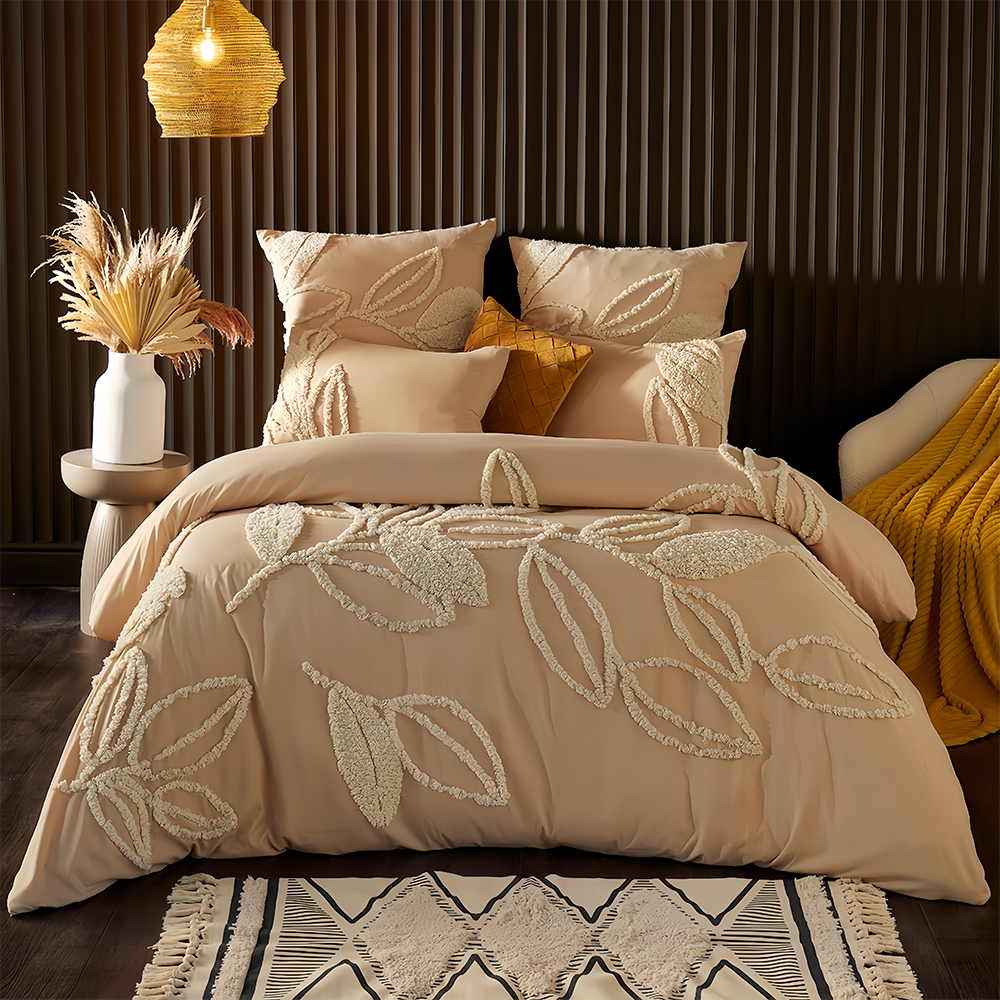
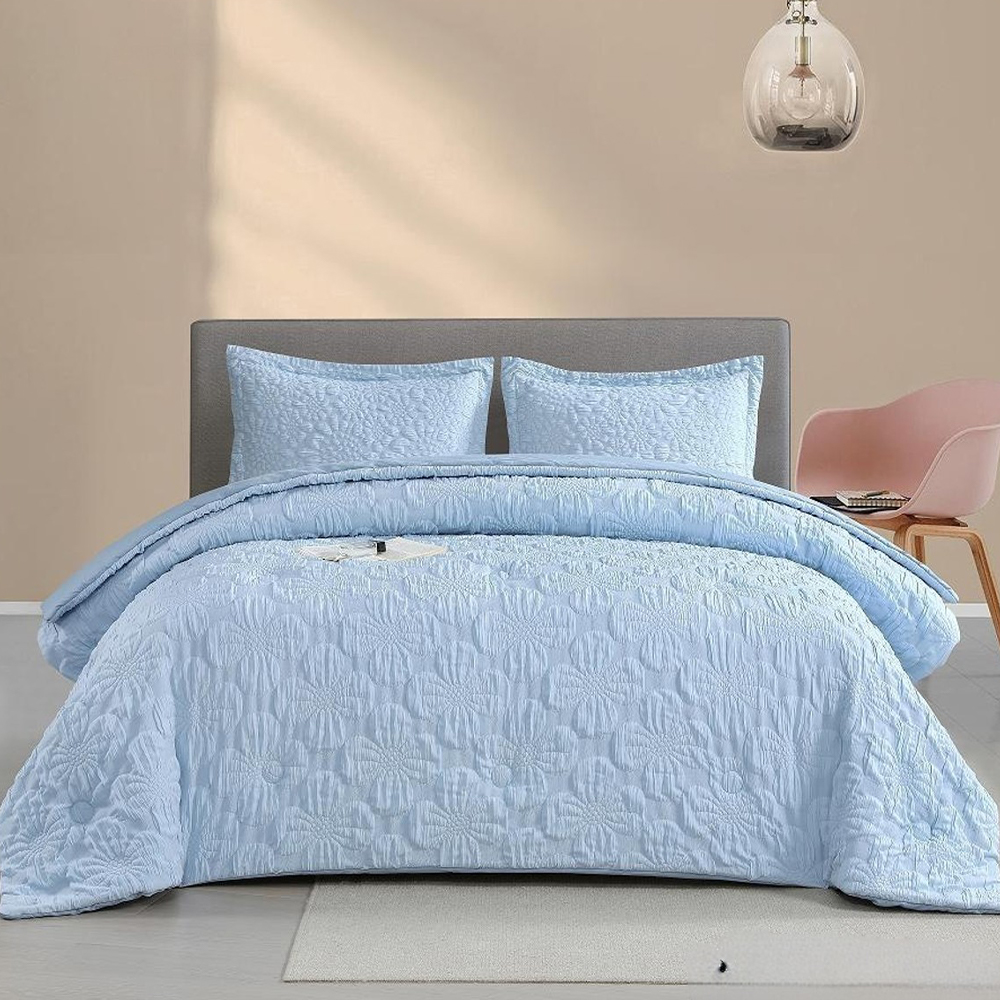
Among decorative duvet cover techniques, tufted and embroidered constructions are two of the most common approaches used to add texture and visual interest to bedding. Tufting involves looping or clustering yarn through the base fabric to create a raised, textured surface, often in geometric or floral patterns. Embroidery, by contrast, stitches thread onto the surface of the fabric to create flat or lightly raised decorative motifs. The comparison below reflects general characteristics associated with each technique based on textile construction principles, not a specific market survey.
The comparison shows that tufted duvet covers generally offer greater textural depth and a more pronounced three-dimensional surface, since the looped yarn sits above the base fabric rather than lying flat against it. Embroidered duvet covers tend to score higher on design intricacy, because stitched thread can render fine detail and curved linework that tufting's looped structure cannot easily replicate. Wash durability varies by construction quality in both techniques, though tightly secured tufting and reinforced embroidery backing both hold up well to repeated laundering when properly finished. Softness retention is generally comparable between the two, since it depends more on the base fabric than the decorative technique itself. Visual dimension favors tufting slightly, since the raised loops catch light and shadow differently than a flat embroidered surface. Neither construction is inherently better; the right choice for a dekbedovertrek depends on the desired aesthetic, whether a bedroom favors a plush, textured look or a more refined, detailed pattern.
Two Growth Indicators Shaping the Global Bedding Market
Regional data from the Mordor Intelligence report offers two distinct but related indicators of where bedding demand is concentrated and where it is expanding fastest. These two metrics measure different things and are shown side by side for comparison rather than as parts of a single total.
North America currently holds the largest regional share of the global bedding market, accounting for about 32.60 percent of total revenue in 2025, reflecting established retail infrastructure and high per-household replacement rates. Asia-Pacific, while starting from a smaller current base, is projected to grow at the fastest compound annual growth rate of the major regions, around 7.05 percent between 2026 and 2031. These two figures describe different aspects of the market: one is a current snapshot of size, the other is a forward-looking growth rate, so they should not be added together or compared as equal quantities. Read together, they suggest a market where mature regions retain the largest existing customer base while emerging regions expand fastest in relative terms. For manufacturers of bedding based in Asia, this combination supports both strengthening export relationships with established Western markets and investing in domestic and regional distribution as local demand accelerates. This dual pattern is common in growing consumer categories, where established regions provide revenue stability while emerging regions provide the fastest incremental growth.
Common Bedding Fabric Types and Their Properties
| Fabric Type | Typical Weave | Feel | Best Suited For |
|---|---|---|---|
| Percale cotton | Plain, one-over-one | Crisp, matte | Warm climates, breathability |
| Sateen cotton | Four-over-one | Smooth, slightly glossy | Softer drape, cooler seasons |
| Tufted cotton | Looped yarn overlay | Textured, plush | Decorative bedrooms, layering |
| Embroidered cotton | Base weave with stitched detail | Flat with raised detail | Refined, detailed aesthetics |
OEKO-TEX Certification and Why It Matters for Bedding Safety
OEKO-TEX Standard 100 is one of the most widely recognized independent certification systems in the textile industry, and it is directly relevant when evaluating bedding. The certification tests finished products, not just the primary fabric, screening for over 100 substances that could be harmful to human health, including formaldehyde, heavy metals, and restricted dyes. Every component of a duvet cover, from the main fabric to thread, buttons, and any trims, is included in this testing, since all of these parts come into contact with skin during use.
It is worth noting what the certification does not claim. OEKO-TEX Standard 100 does not measure thread count and does not certify that a fabric is organic; those are separate considerations covered by different standards such as GOTS. The certification also uses a class system based on intended contact with skin, ranging from Class I for baby products with the strictest limits to Class IV for materials with minimal skin contact, meaning bedding is generally tested under stricter classes given its prolonged nightly contact with skin. For buyers comparing dekbedovertrek options, a valid OEKO-TEX Standard 100 certificate, verifiable through the official OEKO-TEX database, is a concrete way to confirm chemical safety rather than relying on general marketing claims of being "non-toxic" or "chemical-free."
Anatomy of a Well-Constructed Dekbedovertrek
The diagram below illustrates the key construction points that separate a durable duvet cover from a poorly made one, shown as an isometric schematic rather than a product photo.
Reinforced corner ties keep the duvet insert from bunching or shifting inside the cover after repeated washing, which is a common failure point in lower-quality products. A concealed closure, whether a zip or a button placket, prevents the insert from slipping out while keeping the exterior appearance clean and uninterrupted. The base weave layer determines breathability and drape, and this is where percale, sateen, tufted, or embroidered construction choices are applied. Double-stitched seam edges resist fraying and tearing at stress points, particularly along the corners where the fabric experiences the most repeated pulling. Together, these four construction details are a practical checklist buyers can use when evaluating bedding in person or from product photographs, since they reflect build quality more reliably than color or pattern alone.
Sustainable Practices in Bedding Manufacturing
Sustainability in bedding production centers on three areas: material sourcing, dye and finishing processes, and production efficiency. Choosing cotton and blended fibers from responsible sourcing programs reduces the environmental footprint associated with raw material cultivation. Water-based and low-impact dyes reduce chemical discharge compared with older dyeing methods, and this is one of the areas OEKO-TEX certification indirectly supports by restricting harmful dye substances.
Production efficiency improvements, such as optimizing cutting layouts to reduce fabric waste and improving machine energy use during weaving and finishing, also contribute meaningfully to a manufacturer's overall sustainability profile. For buyers sourcing bedding at scale, asking suppliers about certification status, dye processes, and waste reduction practices provides a more concrete basis for sustainability claims than general statements about being eco-friendly.
How to Choose the Right Bedding for Your Bedroom
Selecting the right dekbedovertrek involves matching construction characteristics to personal preferences and climate rather than choosing based on appearance alone.
- Identify your climate needs first: percale weaves suit warmer sleepers, while sateen or tufted constructions add warmth and texture for cooler rooms.
- Check for a valid OEKO-TEX Standard 100 certificate and verify it against the official database rather than relying on packaging claims alone.
- Inspect construction details such as corner ties, closure type, and seam stitching before evaluating color or pattern.
- Decide between tufted and embroidered styles based on whether a textured, dimensional look or a fine, detailed pattern better fits the room.
- Confirm fabric weight and weave density are clearly listed, since these figures indicate durability more reliably than descriptive marketing terms.
About Hangzhou Directions Import & Export Co., Ltd.
Hangzhou Directions Import & Export Co., Ltd. was founded in 2018 in Hangzhou, China, with a focus on redefining sleep comfort and quality. The company is a professional bedding export business dedicated to providing premium bedding collections to global customers, and for seven years has continued developing bedding designs, materials, and techniques aimed at customer satisfaction.
The product portfolio covers a full range of bedding essentials, including duvet covers, quilt covers, comforters, quilts, bedcovers, curtains, cushions, throws, and blankets. The company adheres to core values of integrity, design excellence, superior quality, expert knowledge, and conscious practice.
Design and quality sit at the center of operations, supported by a professional research and design team that combines global fashion trends with functional needs to create products balancing aesthetic appeal and practicality. Production is supervised by experienced technicians across every stage, from raw material inspection through weaving, dyeing, stitching, and final packaging. The company holds certifications including OEKO-TEX Standard 100, supporting consistent product quality.
Guided by a principle of conscious practice, the company is committed to sustainable development, optimizing production processes to reduce energy consumption and waste while prioritizing eco-friendly materials and dyes.
Frequently Asked Questions
Q1: What does the term bedding actually cover?
A1: Bedding refers broadly to bed textiles, including duvet covers, quilt covers, sheets, and pillowcases used together as a bedding set.
Q2: What is the difference between a tufted and an embroidered dekbedovertrek?
A2: Tufting creates a raised, looped texture on the fabric surface, while embroidery stitches thread onto the fabric to form flat or lightly raised decorative detail.
Q3: Does OEKO-TEX certification mean a duvet cover is organic?
A3: No, OEKO-TEX Standard 100 tests for harmful substances in the finished product, but it does not certify organic fiber sourcing, which is covered by separate standards such as GOTS.
Q4: What should shoppers check when browsing a dekbedovertrek sale online?
A4: Focus on construction quality indicators such as weave type, thread density, certification status, and seam stitching, since these details matter more than promotional listings alone.
Q5: How often should bed linen be replaced?
A5: There is no fixed rule, but bed linen is generally replaced more frequently than mattresses, since repeated washing gradually affects fabric strength and appearance over time.
- QUICK LINKS
- Company
- Customize
- Sustainable
- Download
- Contact Us
- GET IN TOUCH
-
- [email protected]
[email protected] - +86-13777321650
- +86-571-87247829
- Room 703, Building 2, No. 498 Fengqing Road, Gongshu District, Hangzhou City, Zhejiang Province, China
- [email protected]
- WHAT’S NEWS
- Corporate News
- Industry News