+86-13777321650


 русский
  Español

Choosing A Tufted Quilt Cover Set
Content
- 1 What Sets A Tufted Duvet Cover Apart From A Standard Weave
- 2 Choosing The Right 2 Persoons Dekbedovertrek Size
- 3 Material And Weave Choices Behind A Quality Quilt Cover
- 4 Quality Signals Worth Checking On A Tufted Bedding Set
- 5 About Hangzhou Directions Import And Export Co Ltd
- 6 Caring For A Tufted Duvet Cover So The Pattern Holds Its Shape
- 7 Sustainable Practices In Bedding Production
- 8 Frequently Asked Questions
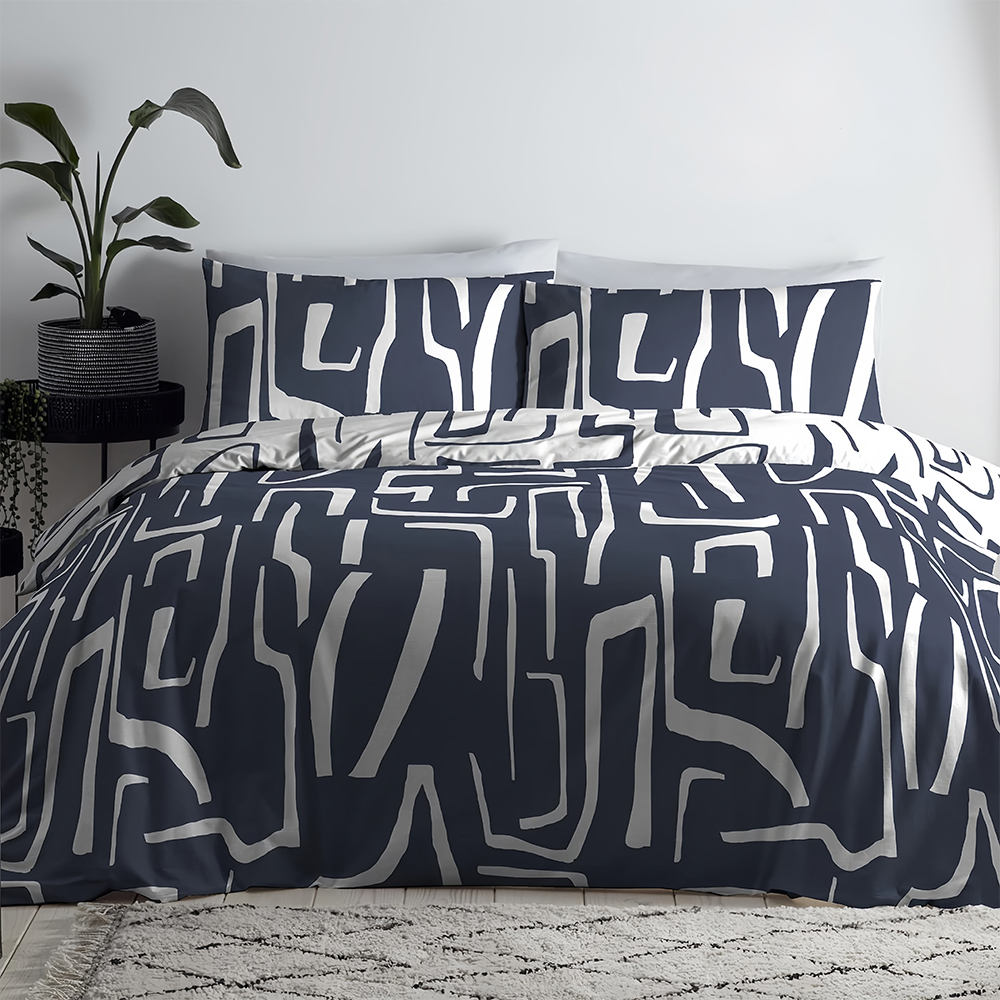
A tufted duvet cover set is the practical choice for anyone who wants visible texture and a handmade look on a bed without relying on printed patterns, and for a 2 persoons dekbedovertrek this texture also helps hide the natural creasing that happens over a larger surface area. Tufted bedding uses a punch needle or tufting gun technique to push extra yarn through a base fabric, which creates raised loops or cut pile that stand out from a flat woven or printed cover. The sections below explain how tufted duvet covers and quilt covers are made, what to check for quality, how to pick the right 2 persoons dekbedovertrek size, and how to care for tufted textiles so the pattern keeps its shape over time.
What Sets A Tufted Duvet Cover Apart From A Standard Weave
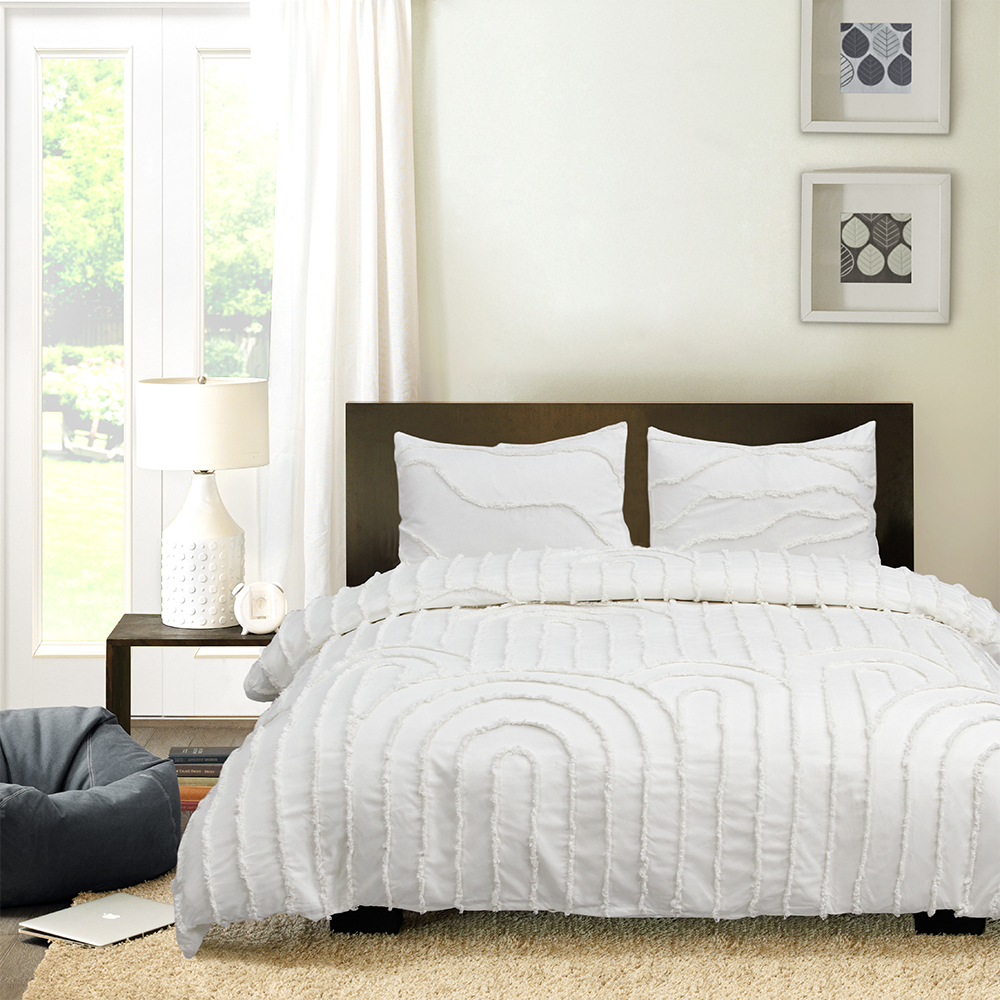
Standard duvet covers and quilt covers are produced through weaving or printing, where the pattern sits flat against the fabric surface. A tufted duvet cover quilt cover instead has yarn mechanically inserted through a woven base, so the design has physical depth you can feel with your hand. This raised texture is the main visual and tactile difference buyers notice first, and it is one reason tufted bedding has grown popular for bedrooms that want a softer, more textile-forward look rather than a crisp printed finish.
Because the tufting process adds an extra layer of yarn, a tufted quilt cover generally has more surface weight than a plain printed cover of the same fabric type. This added weight is not about warmth in the way a filled comforter is, since a duvet cover or quilt cover is the outer shell rather than the insulating fill, but it does affect how the cover drapes and how the tufted pattern holds its shape through repeated washing.
Choosing The Right 2 Persoons Dekbedovertrek Size
In the Dutch market a 2 persoons dekbedovertrek generally refers to a duvet cover sized for a double bed shared by two people, and getting this measurement right matters more for a tufted cover than a plain one because the tufted pattern is designed to repeat across a specific panel width. A cover that is too narrow will cut the tufted motif off awkwardly at the seam, while a cover sized correctly lets the raised pattern sit centered and balanced across the bed.
This chart is an illustrative comparison of relative width categories rather than a precise dimensional chart, and it is meant to show why sizing terms differ across bed formats. The 1 persoons category sits at the narrow end because it is built for a single sleeper. The 2 persoons dekbedovertrek sits in the middle as the most commonly ordered width for shared double beds, which is why tufted patterns for this format are usually designed with a centered motif that reads well from either side of the bed. The lits jumeaux or extra wide format extends furthest because it covers two mattresses pushed together, so the tufted pattern needs a wider repeat to avoid looking stretched or off center. Checking the exact centimeter measurement against your own mattress width before ordering remains the most reliable way to avoid a poor fit, since naming conventions can vary slightly between suppliers.
Material And Weave Choices Behind A Quality Quilt Cover
The base fabric underneath the tufted yarn plays a large role in how the finished duvet cover feels and performs over time. Cotton bases are common because cotton takes tufting well and breathes comfortably against skin, while cotton blends can add durability for households that wash bedding frequently.
| Base Fabric | Feel | Typical Use Case |
|---|---|---|
| 100 percent cotton | Breathable, soft | Everyday bedroom use |
| Cotton polyester blend | Smooth, wrinkle resistant | Frequent wash households |
| Brushed cotton | Warmer surface texture | Cooler season bedding |
Quality Signals Worth Checking On A Tufted Bedding Set
Not every tufted duvet cover quilt cover is finished to the same standard, and a few practical checks can reveal a great deal about how the product was constructed before it reaches a bedroom.
- Check that tufted loops are anchored evenly and do not pull loose when gently tugged.
- Look at the reverse side for a clean finish rather than loose thread ends.
- Confirm the closure method, such as buttons or a concealed zipper, sits flat when closed.
- Feel the base fabric weight to judge how it will drape once filled with a duvet or quilt insert.
- Ask whether the fabric has been tested against a recognized textile safety standard such as OEKO-TEX Standard 100.
This radar chart is a general illustration of how quality traits can be weighed against one another rather than a measured score for any single product. Loop anchoring and finish quality sit toward the outer edge here because uneven tufting is usually the first flaw a buyer notices when running a hand across the surface. Closure fit and fabric weight are shown as moderately strong traits, since these depend on both design and the base fabric choice discussed earlier in this article. Safety testing is included because a duvet cover sits directly against skin for hours each night, so verification against a recognized textile standard adds a layer of confidence beyond visual inspection. Reading this chart alongside the checklist above gives a fuller picture than either would provide on its own.
About Hangzhou Directions Import And Export Co Ltd
Hangzhou Directions Import & Export Co., Ltd was founded in 2018 in Hangzhou, China with a focus on redefining sleep comfort and quality, and the company has spent seven years developing bedding designs, materials, and production techniques for customers across international markets. The product portfolio covers a full range of bedding essentials including duvet covers, quilt covers, comforters, quilts, bedcovers, curtains, cushions, throws, and blankets. The company holds OEKO-TEX Standard 100 certification, which is a recognized textile testing standard that checks fabrics for harmful substances.
Design and quality sit at the center of the company's operations, supported by a research and development team that combines current fashion direction with everyday functional needs. Production is supervised from raw material inspection through weaving, dyeing, stitching, and final packaging, and the company follows a conscious practice approach that prioritizes eco-friendly materials and dyes alongside efforts to reduce energy consumption and waste during manufacturing.
Caring For A Tufted Duvet Cover So The Pattern Holds Its Shape
Tufted textiles need slightly different handling from flat woven bedding because the loops or cut pile can loosen if washed too aggressively. A gentle wash cycle, a lower spin speed, and avoiding harsh fabric softeners all help preserve the tufted texture over repeated laundering.
The darker line in this chart represents a gentle wash routine with a lower spin speed and mild detergent, while the lighter line represents a standard high heat and high spin routine. Both lines trend downward across repeated washes, which reflects the natural fact that any textile experiences some wear over time regardless of care. The gentle routine line stays closer to its starting position through ten wash cycles, which is the general pattern textile care guidance points to when discussing tufted or looped fabrics. The standard routine line declines more steadily, showing why a lower heat setting is often recommended specifically for tufted bedding rather than for flat woven sheets. Following washing instructions on the care label remains the most direct way to extend the working life of a tufted quilt cover.
Sustainable Practices In Bedding Production
Conscious production practices have become a bigger part of bedding manufacturing as buyers pay closer attention to how textiles are made, not only how they look on a bed. Reducing water and energy use during dyeing, sourcing eco-friendly dye formulations, and minimizing offcut waste during cutting and stitching are among the practical steps manufacturers can take.
This donut chart offers a general picture of where conscious production efforts tend to concentrate rather than an exact measured breakdown for any single factory. Eco-friendly materials and dyes take the largest share here because ingredient and dye selection happens early in the process and shapes every downstream step. Energy reduction during production follows closely, covering steps such as dyeing and finishing where heat and water use are typically highest. Waste minimization forms a smaller but still meaningful share, reflecting efforts to cut offcut material during pattern cutting and stitching. Manufacturers who report progress across all three areas together, rather than emphasizing only one, tend to show a more complete conscious practice approach.
Frequently Asked Questions
Q1. What does 2 persoons dekbedovertrek mean.
It refers to a duvet cover sized for a standard double bed shared by two people, sitting between single and extra wide lits jumeaux sizing.
Q2. Why does a tufted duvet cover feel different from a printed one.
The tufted yarn is physically pushed through the base fabric, creating raised loops or pile that add texture and depth compared with a flat printed surface.
Q3. How should tufted bedding be washed.
A gentle cycle with lower spin speed and mild detergent generally helps the tufted loops or pile hold their shape across repeated washes.
Q4. What base fabric works best under tufted yarn.
Cotton and cotton blend bases are common choices because they accept tufting well while remaining breathable and durable through regular use.
Q5. Does Hangzhou Directions Import and Export offer certified bedding.
Yes, the company holds OEKO-TEX Standard 100 certification, which verifies fabrics have been tested against harmful substances.
- QUICK LINKS
- Company
- Customize
- Sustainable
- Download
- Contact Us
- GET IN TOUCH
-
- [email protected]
[email protected] - +86-13777321650
- +86-571-87247829
- Room 703, Building 2, No. 498 Fengqing Road, Gongshu District, Hangzhou City, Zhejiang Province, China
- [email protected]
- WHAT’S NEWS
- Corporate News
- Industry News